Do AC Refrigerant Leak Sealers Actually Work?
Limited and case-dependent — not a substitute for professional leak detection. Here is what sealants can and cannot do, and the risks they carry.
What Refrigerant Leak Sealers Are and How They Work
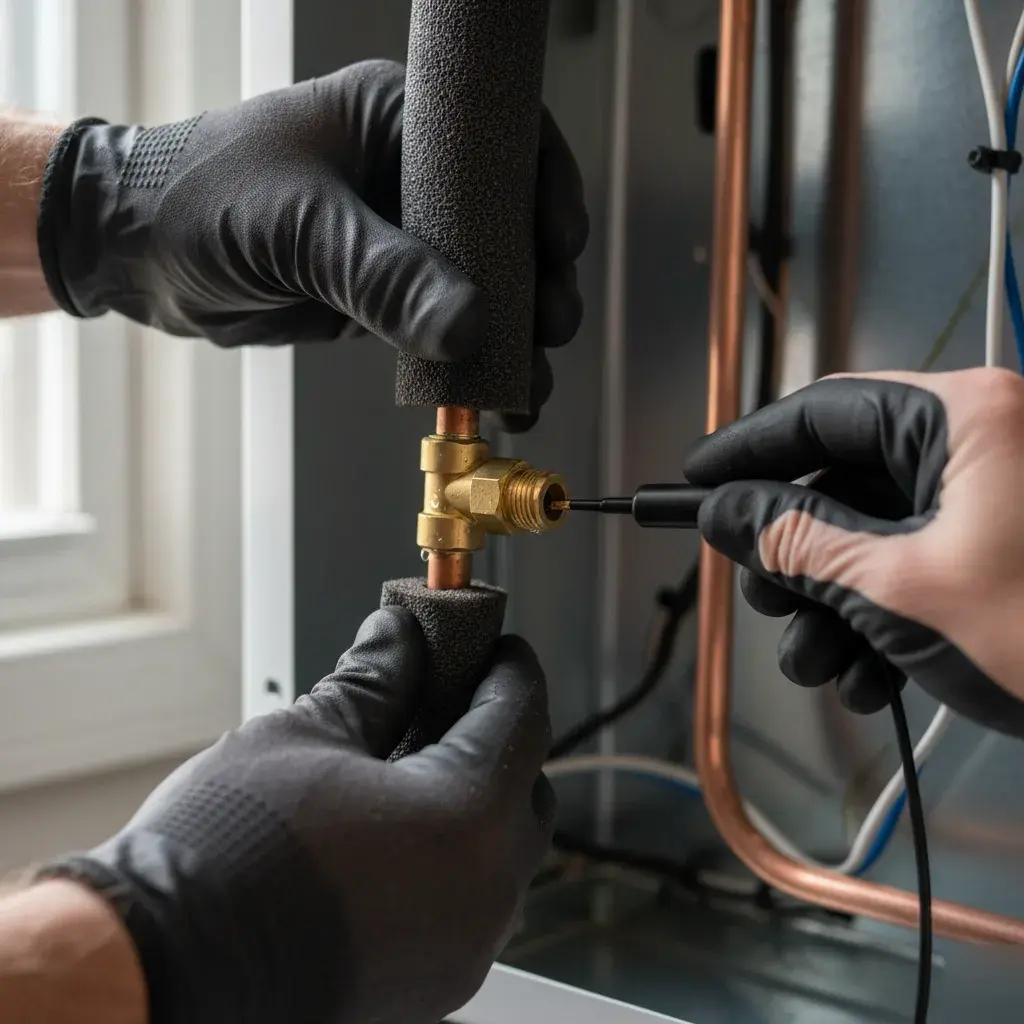
AC refrigerant leak sealers are chemicals added into a system's refrigerant lines. The sealer circulates with refrigerant and is meant to plug small holes from the inside. Simple idea — whether it works reliably is a different conversation.
The Basic Chemistry
Most sealers react with moisture or oxygen at the leak point and harden to form a plug. The theory: the chemical stays liquid inside the closed system and only solidifies where outside air enters. In practice, sealant can also affect expansion valves, compressors, and evaporator coils — not just the leak site.
What Goes Into Your System
Once added, the product travels through every component:
- The compressor
- The outdoor condenser coil
- The indoor evaporator coil
- Every connecting line, valve, and fitting
That is a lot of territory for a chemical designed to harden when it meets air or moisture. Trace moisture already present in many ageing systems makes outcomes unpredictable.
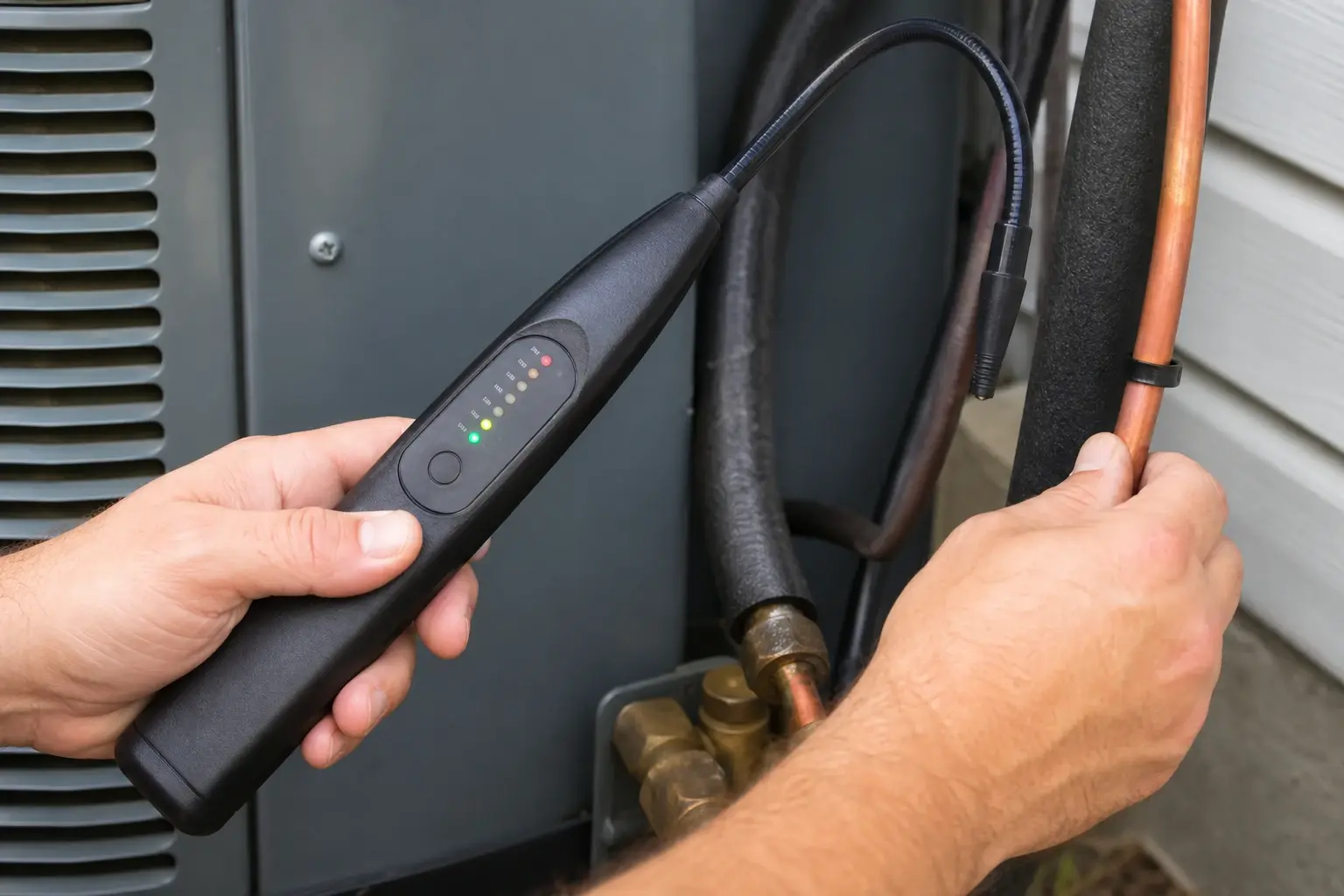
We don't recommend DIY sealant as a primary fix. Professional leak detection finds the source first, and then proper leak repair at the source fixes the actual opening and recharges the system to spec — instead of leaving a chemical to harden somewhere you can't see.
Do AC Refrigerant Leak Sealers Actually Work?
This video explains what AC refrigerant leak sealers can and cannot do. Leak sealers are additives designed for a limited range of very small leaks, such as tiny pinhole leaks in copper tubing. The video explains why they are not a substitute for professional leak detection. Low refrigerant usually means refrigerant has escaped somewhere, and the source still needs to be found. Coil leaks, service valve problems, damaged fittings, line-set issues, and larger leaks may not be helped by sealer. The video also explains why additives can complicate future service in some situations and why leak detection should come before repair decisions.
Real-World Results Are Limited and Case-Dependent
Here is the honest answer: sealers work sometimes — not always, and not even most of the time. Results depend heavily on leak size and location.
When a Sealer Might Help — Briefly
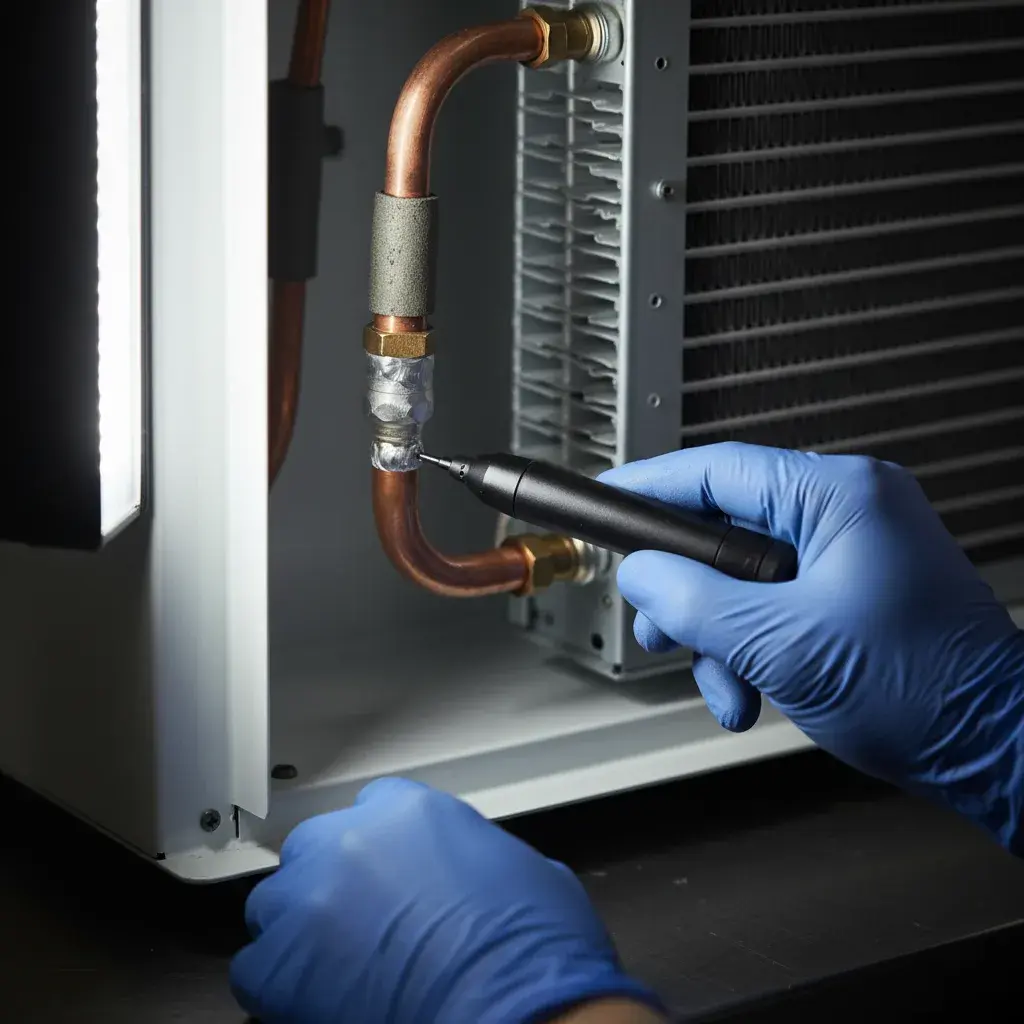
A pinhole in an exposed copper line joint might seal for a few weeks or months. The homeowner notices cooling return and credits the sealer. But that temporary fix can mask a problem that keeps growing. The leak often reopens, or a new one forms nearby from corrosion or vibration damage that was never addressed.
Conditions That Matter
- Leak must be extremely small — pinhole-sized
- Leak must be in accessible copper line, not inside a coil
- System must have enough refrigerant charge to circulate sealant
- No prior sealant attempts clogging internal components
Most service calls involve leaks that do not meet those conditions — corroded evaporator coils, compressor issues, or slow leaks that drained charge for months before anyone noticed.
Risks Sealers Can Cause to Your AC System
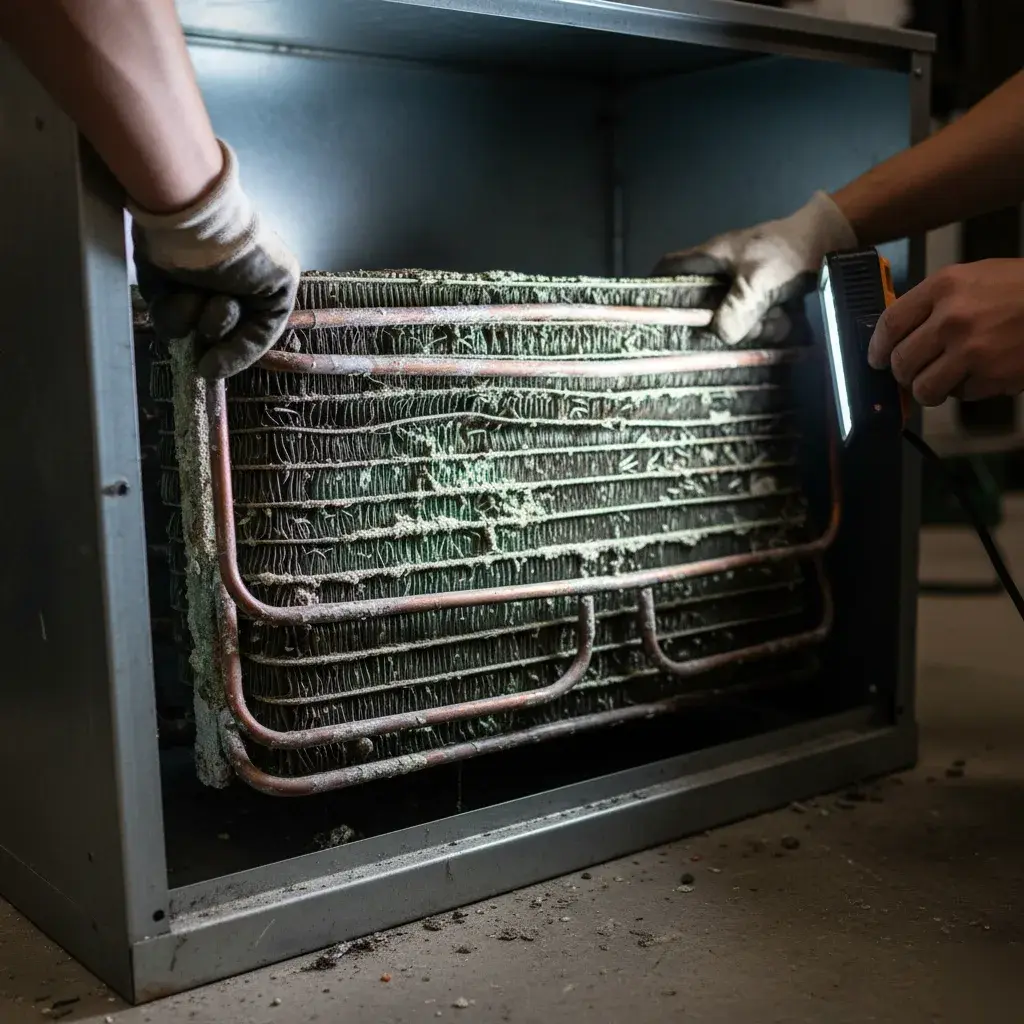
The biggest risk is not that the sealer fails — it is what it leaves behind. Sealant residue can contaminate compressor oil, coat the evaporator coil, and reduce heat transfer. Later repairs may require a full system flush. Some components cannot be saved after contamination.
Why "It Worked for a While" Is Not Really Working
Hearing that a sealer held for six weeks is not success — it is a delay. The underlying leak kept growing while the compressor ran under stress. What could have been a straightforward refrigerant leak repair can turn into coil replacement or compressor damage.
The Right Path When You Suspect a Leak
If your AC is low on refrigerant or losing cooling power, start with professional leak detection. A targeted repair — or evaporator coil replacement when corrosion is the root cause — protects the system long-term. Sealant is not a substitute for knowing where the leak actually is.
Related Services
- Refrigerant Leak Detection in Deer Park, NY
Find the exact leak source before any repair decision.
- Refrigerant Leak Repair in Deer Park, NY
Targeted repair after the leak is located.
- Evaporator Coil Replacement in Deer Park, NY
When coil corrosion makes sealant a poor option.
Common Questions
- Do AC refrigerant leak sealers actually work?
- Leak sealers work sometimes, but results vary widely depending on leak size and location. They have the best chance on very small pinhole leaks in accessible copper lines. Larger leaks, coil corrosion, or compressor cracks are usually past what sealant can address reliably. Most leaks homeowners notice by the time cooling drops are not good candidates for a sealer fix.
- What is the biggest misconception about using a refrigerant leak sealer?
- That if your AC starts cooling again after adding a sealer, the problem is fixed. It often is not. The sealer may slow refrigerant loss for a few weeks, but the underlying leak remains — and may be getting worse. The compressor works harder. The leak can reopen. Sealant residue may coat internal components. A temporary improvement is not the same as a real repair.
- Can a refrigerant leak sealer damage my AC system?
- Yes, it can. The chemical travels through every part of your system — compressor, expansion valve, evaporator coil, and connecting lines. If it hardens in the wrong place, it creates blockages. It can contaminate refrigerant oil that keeps your compressor lubricated. If you need a proper repair later, a technician may have to flush the entire system first. Some components cannot be recovered after sealer contamination.
- Why are refrigerant leaks harder to ignore in hot humid summers?
- Hot humid weather means your AC runs hard for months. A system low on refrigerant works much harder to keep up. That extra strain speeds wear on the compressor and other components. Masking a leak during peak cooling season puts your whole system at risk when you need it most.
- When should I call a professional instead of trying a refrigerant leak sealer?
- Call a professional any time your AC is losing cooling power or running low on refrigerant. Refrigerant does not just evaporate on its own — low charge means a leak somewhere. A trained technician can run proper leak detection to find the exact source. That is the only way to know if a targeted repair is possible or if a component needs replacing. DIY sealant products are not a substitute for diagnosis.
- What size leak can a refrigerant sealer realistically address?
- Sealants may address only very small leaks — often pinhole-sized openings in accessible copper refrigerant lines, not inside an evaporator coil or compressor. If the system is already too low on refrigerant to circulate sealant properly, it may not reach the leak at all. By the time most homeowners notice cooling problems, the leak is often past that threshold.
AC losing cooling power?
Start with leak detection — not a DIY sealant. Find the source before the compressor takes more damage.