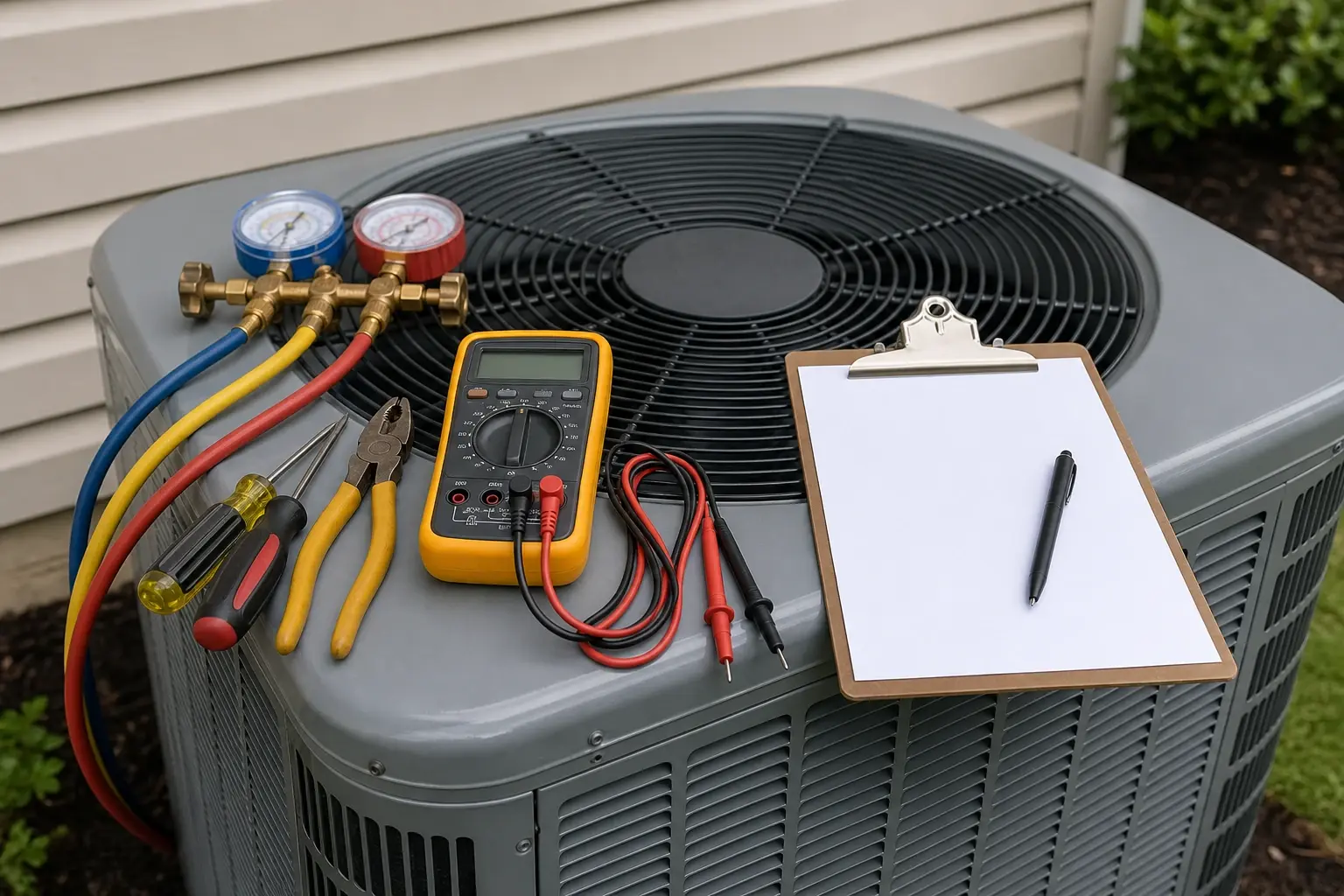
What Does Regular AC Maintenance Include?
A proper tune-up is a full inspection of your cooling system's mechanical, electrical, and airflow components — not just a filter swap.
What a Standard AC Tune-Up Actually Covers
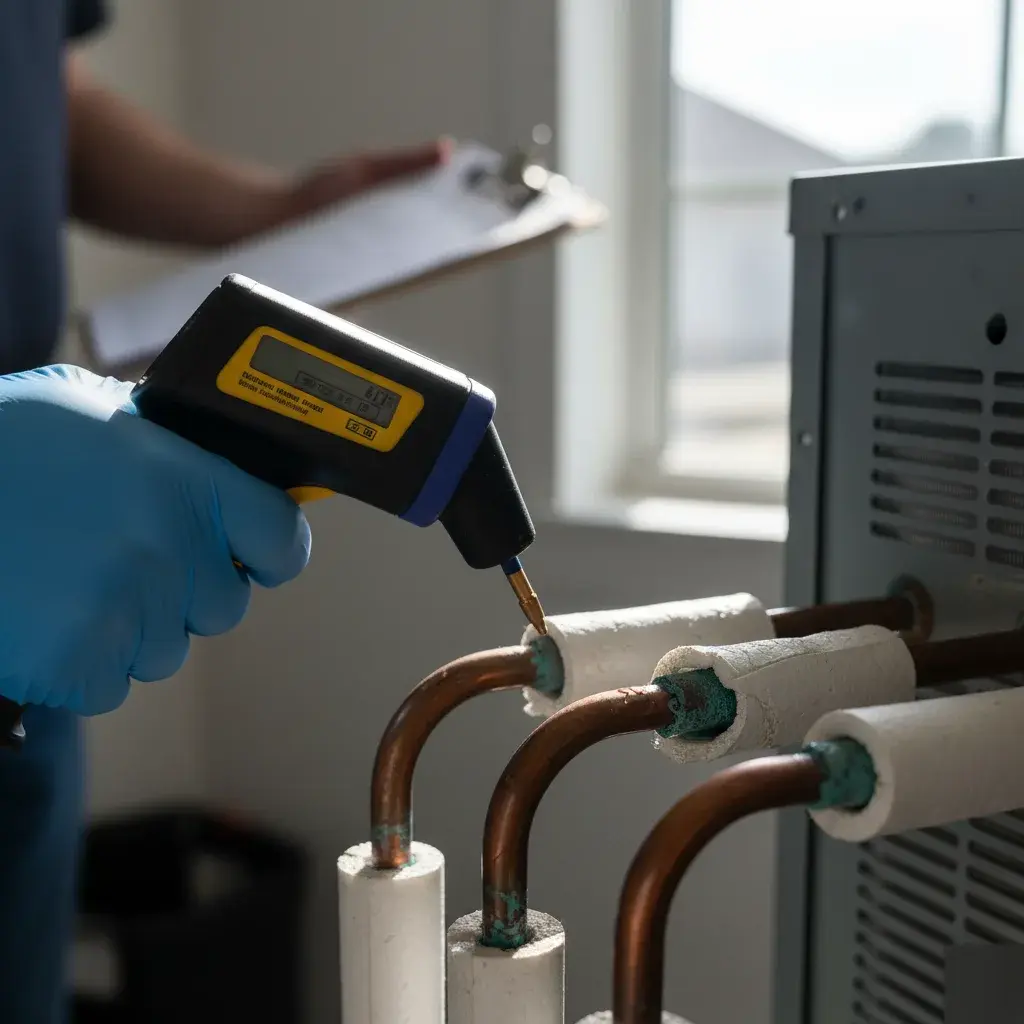
Here is what a technician should cover during a standard visit:
- Inspect and replace the air filter. Pollen and dust can fill a filter faster than you might expect.
- Clean the condenser coils. Your outdoor unit collects dirt, grass clippings, and debris all season.
- Check refrigerant levels. Low refrigerant usually means a leak.
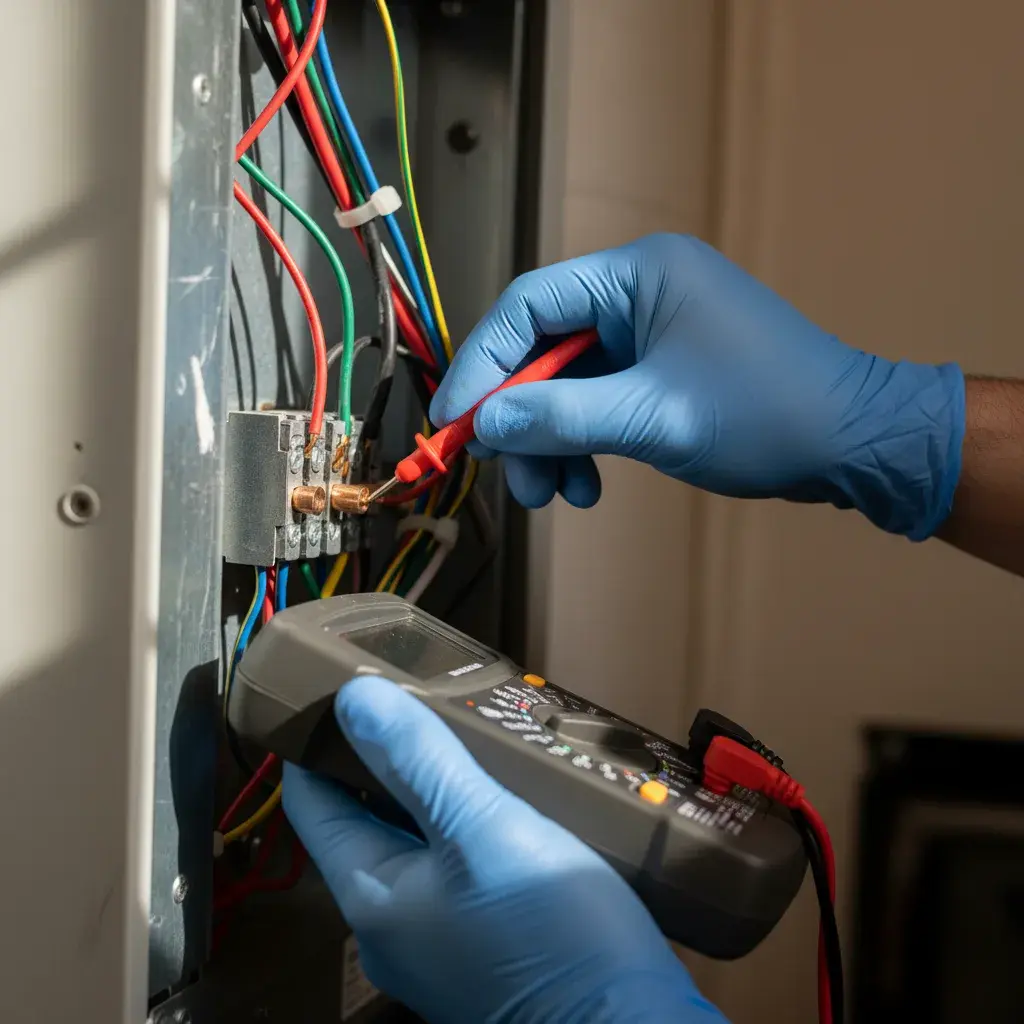
- Test electrical connections and components. Loose wires cause short cycling. Weak capacitors cause startup failures.
- Clear the condensate drain line. A blocked line can lead to water damage inside your home.
- Evaluate thermostat calibration. Catches temperature drift early.
- Inspect the blower motor and fan. Sluggish airflow affects every room.
Seven steps. A thorough technician will not skip any of them.
Why Each Step Matters for Long Island Summers
Humid summers make your AC work overtime pulling moisture from the air. Dirty coils alone can noticeably cut into how efficiently your system cools. A failing capacitor might not give warning signs until the hottest day of the year.
Learn more on our AC tune-up page.
How Often Your AC Unit Should Be Serviced
For most central air systems, once per year is the baseline — ideally in spring before cooling season peaks.
Annual Service Is the Minimum
Schedule your AC tune-up in March or April. Technicians have more open slots, parts are easier to source, and you fix problems before July heat arrives.
When Twice a Year Makes Sense
Heat pumps run year-round. Older systems past 10 years. Homes with pets or heavy pollen exposure. Any of these can justify a second visit — often in fall before heating season if the unit doubles as a heat source.
What You Can Do Between Visits
- Change or clean your air filter every 1–3 months
- Keep the area around your outdoor condenser clear of debris
- Listen for new sounds — grinding, clicking, or buzzing
- Watch for short cycling or uneven cooling across rooms
DIY upkeep helps, but it does not replace a professional tune-up.
What Happens When AC Maintenance Gets Skipped

We see this pattern every August: a homeowner calls because AC stopped cooling. They say it was fine last year. Inside the unit, coils are packed with grime, the capacitor is barely holding a charge, and the drain line is blocked.
Efficiency Drops First
A neglected system works harder for the same comfort. Your electric bill creeps up while cooling quality slips. Skipped maintenance tends to chip away at efficiency a little more with each passing season.
Small Issues Become Major Repairs
A dirty condenser coil can overheat a compressor over months. Low refrigerant can freeze and crack an evaporator coil. Thermostat drift leads to short cycling that stresses every component.
Every one of those items gets checked during routine maintenance. None of them announce themselves with a warning light.
When to Call for a Diagnostic Instead
If your system is already showing symptoms — warm air, strange sounds, short cycling — skip the tune-up conversation and start with an AC diagnostic. You need a written diagnosis of what is wrong before any repair work begins.
Related Services
- AC Repair Services in Deer Park, NY
When maintenance finds a deeper issue, see the full repair service hub.
- AC Tune-Up in Deer Park, NY
Full cooling inspection before summer demand.
- AC Diagnostic in Deer Park, NY
When something is already wrong, start with a written diagnosis.
Common Questions
- How does local climate affect how often I should service my AC?
- Humid summers put extra strain on your AC compared with drier climates. High humidity means your system pulls moisture from the air constantly, wearing components faster. Pollen and dust can clog filters and coils quicker than you might expect. Most homes should stick to annual service at minimum. If your system is older or runs as a heat pump year-round, twice-yearly service is often the smarter call.
- What is the difference between an AC tune-up and an AC repair visit?
- A tune-up is preventive — it checks, cleans, and tests your system before something breaks. A repair visit fixes a problem that already exists. If a technician finds a weak capacitor or refrigerant leak during your tune-up, that becomes a separate repair conversation. The tune-up finds the problem early so you are not scrambling on a hot afternoon.
- Can I just change the filter myself and skip the professional tune-up?
- Changing your filter is a good habit, but it only covers one small part of what your system needs. A professional tune-up checks refrigerant levels, tests electrical connections, clears the condensate drain, cleans condenser coils, and evaluates the blower motor — none of which a filter swap covers.
- What is a common mistake homeowners make about AC maintenance timing?
- Waiting until something goes wrong before calling a technician. A system can run while a capacitor is weakening, coils are getting dirtier, and a slow refrigerant leak is developing. Schedule your tune-up in March or April — before peak season — so issues get fixed while technicians have open calendar slots.
- How do I know if my AC has not been serviced long enough to need attention right away?
- If your AC has not been professionally serviced in two or more years, it needs attention now. Signs include short cycling, rooms that feel sticky even with the AC running, higher electric bills without a change in usage, or weak airflow through vents.
- Do heat pump systems need more frequent AC maintenance?
- Yes. Heat pumps handle both heating and cooling, so they run year-round instead of just in summer. That doubles wear on components like the blower motor, coils, and refrigerant lines. Two service visits per year — spring and fall — is often appropriate for heat pumps.
Time for your seasonal AC tune-up?
Schedule before peak cooling season and catch small problems early.