What Is the Three-Minute Rule for Air Conditioners?
A common compressor-protection habit — not a universal law. Wait a few minutes before restarting your AC so refrigerant pressure can equalize.
The Three-Minute Rule in Plain Language
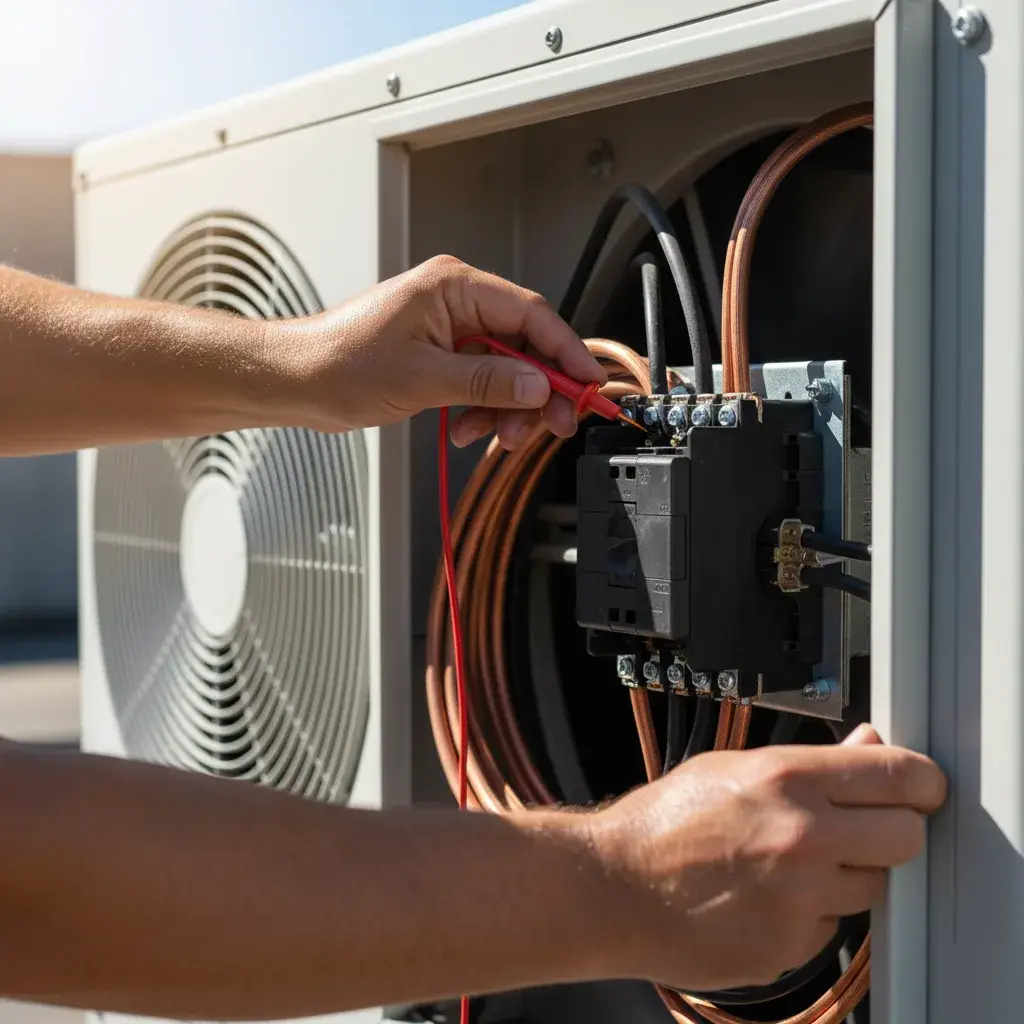
Wait at least three minutes before turning your air conditioner back on after it shuts off. Your compressor builds high pressure on one side and low pressure on the other while running. Restart too fast and the compressor may try to start against that imbalance — a forced restart that stresses the motor.
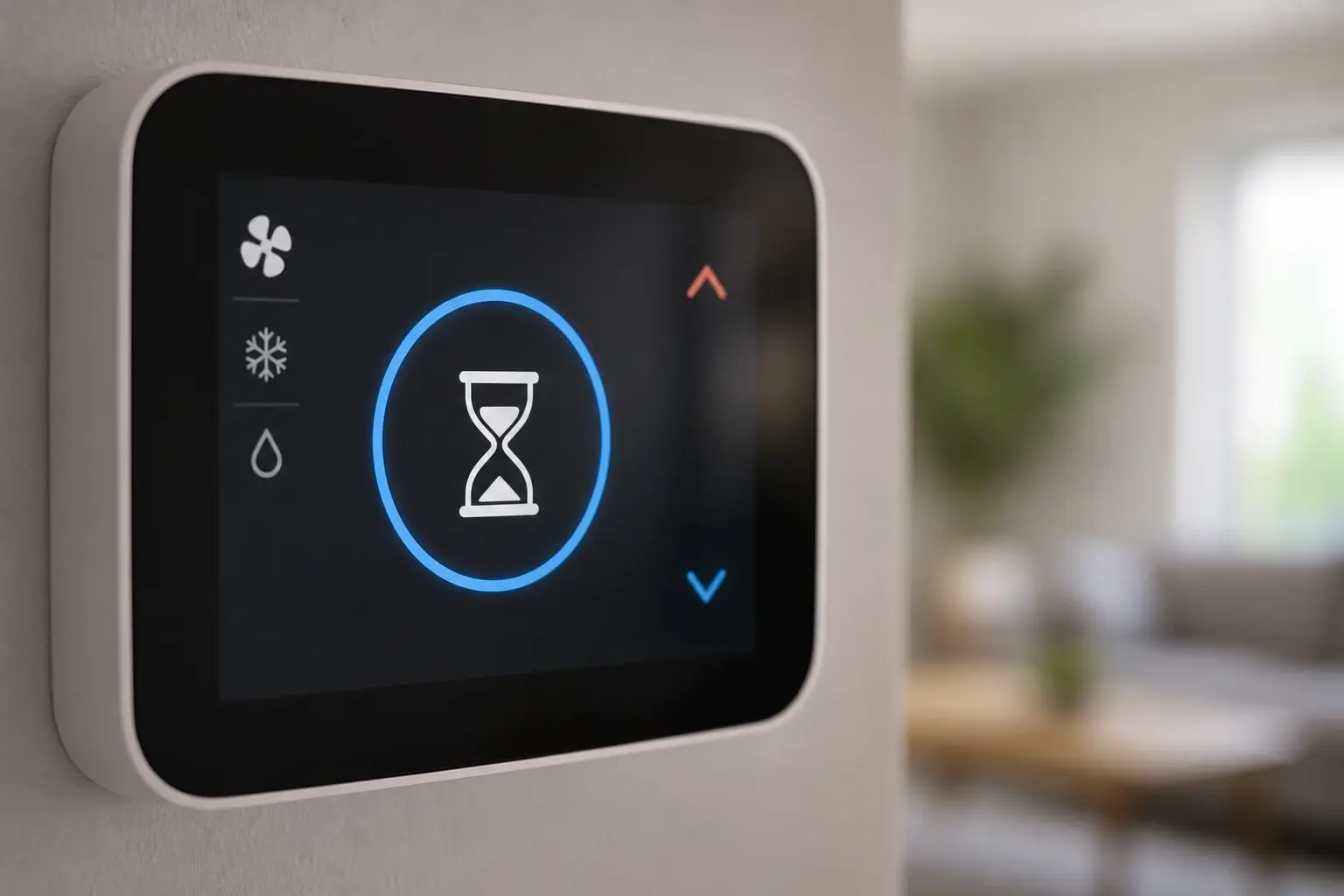
Most modern thermostats include a built-in delay to handle this automatically. Older thermostats in many homes may not. Manual toggling at the thermostat or breaker bypasses even a built-in delay.
What Happens During the Wait
Refrigerant pressures equalize across the system. The high side drops, the low side rises, and they meet in the middle. Once pressures balance, the compressor can start more smoothly.
Letting the system restart on its own schedule rather than forcing it is one of the simpler habits that can help extend equipment life and keep energy use in check.
When the Rule Gets Broken
- Power flickers during a storm and restores electricity instantly
- A homeowner turns the thermostat off, then back on within a minute
- A faulty thermostat sends rapid on-off signals
- Repeated manual adjustments throughout the day
There's an important difference here: if your system is cutting on and off every few minutes on its own, that isn't the three-minute rule at work. Repeated short cycling has its own causes — a failing capacitor, low refrigerant, an airflow restriction — and it wears the compressor the same way a forced restart does.
Any of these can force what technicians call a hard start. Repeated hard starts over a summer can wear down internal components — and compressor problems are among the most costly cooling repairs.
What Is the Three-Minute Rule for Air Conditioners?
This video explains the three-minute rule for air conditioners and why waiting before restarting an AC can help protect the compressor. After the system shuts off, refrigerant pressure needs time to equalize before the compressor starts again. Restarting too quickly can cause hard starting, higher electrical draw, breaker trips, or extra compressor stress. The video explains that three minutes is a common guideline, not an exact rule for every system. Some systems may need longer, especially on hot days or after a power interruption. It also explains thermostat delay messages and when repeated short cycling or restart problems should be diagnosed.
What Happens Inside Your AC When You Restart Too Soon

Your air conditioner is not a light switch. Cutting the mechanical process short causes problems you may not see right away.
Hard Starts and Capacitor Stress
On a hard start, the compressor draws a surge of current. The start capacitor helps — but repeated surges wear it down. A weak capacitor makes hard starts more likely, which creates a cycle that ends in breakdown.
Why Three Minutes — and Not a Universal Law
Three minutes is a practical floor many residential systems need under normal conditions. Some units balance faster; some take longer. It is not a magic number — it is a common guideline. After a long cooling cycle on a very hot afternoon, waiting a bit longer than three minutes is often wise.
If your system short cycles on its own, the delay rule will not fix the underlying problem. See AC short cycling repair or schedule an AC diagnostic.
How to Safely Restart Your AC After a Power Outage
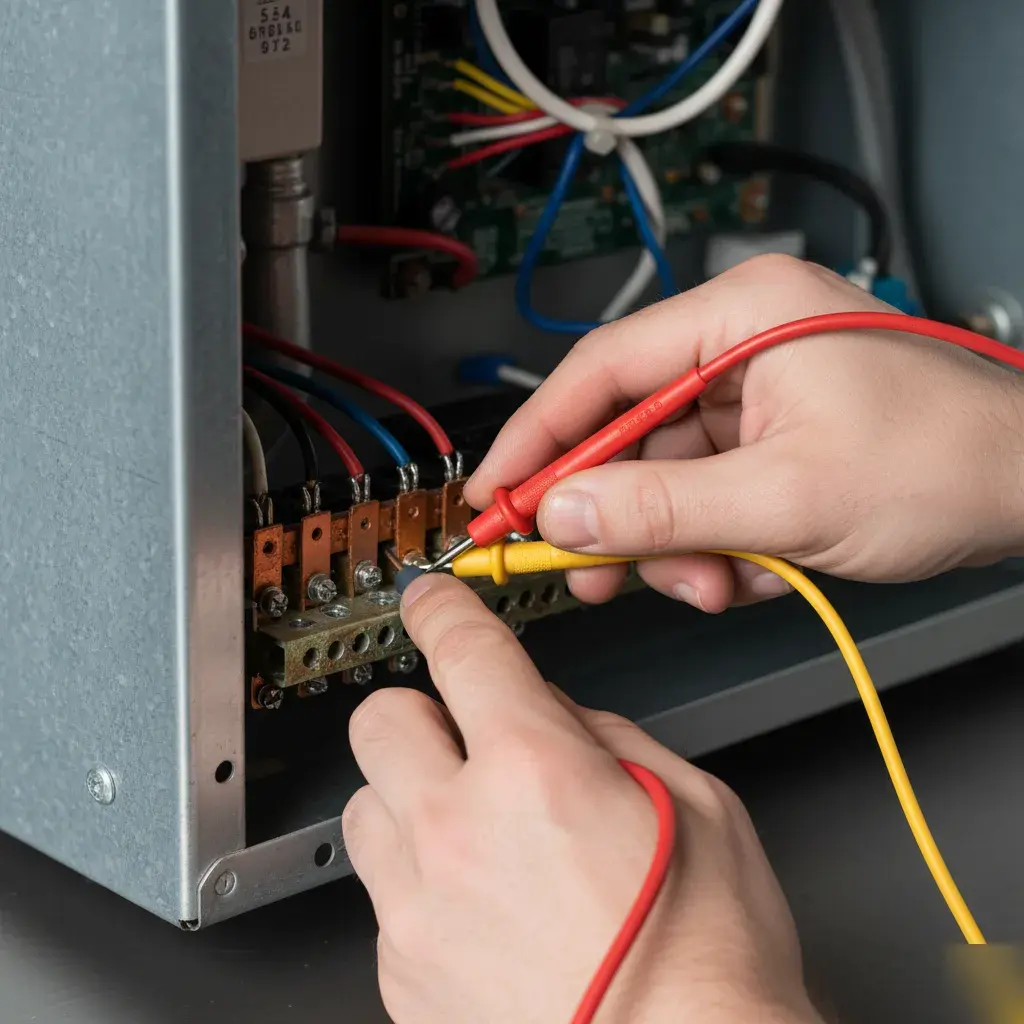
After power returns, resist the urge to flip the AC on immediately. Wait at least three minutes — set a phone timer if it helps.
- Leave the thermostat off when power first returns
- Wait three to five minutes for pressures to equalize
- Turn the thermostat back to your normal cooling setting
- If the system still short cycles, stop adjusting and call for service
A thermostat replacement with a built-in compressor delay can protect the system automatically — especially helpful in homes where manual restarts happen often.
A built-in wait timer protects the compressor, but it can't fix a system that keeps cutting out on its own. If yours does that, the smart move is to have it diagnosed rather than keep cycling the power and hoping.
Related Services
- AC Short Cycling Repair in Deer Park, NY
When rapid on-off cycles point to a deeper problem.
- Thermostat Replacement in Deer Park, NY
Upgrade to a thermostat with proper delay protection.
- AC Diagnostic in Deer Park, NY
Find out if hard starts are already stressing your compressor.
Common Questions
- What is the three-minute rule for air conditioners?
- The three-minute rule means waiting at least three minutes before restarting your AC after it shuts off. During that time, refrigerant pressure equalizes across the system. If you restart too soon, the compressor may have to start against built-up pressure, which strains the motor. Three minutes is a common guideline because many residential systems need roughly that long to balance — not a hard rule for every unit.
- Does summer heat make the three-minute rule more important?
- During hot weather, your AC often runs longer and harder. That means refrigerant pressure can be higher before the system shuts off. The higher the pressure, the more stress a too-fast restart can cause. On very hot days, waiting a bit longer than three minutes is often smarter than restarting immediately.
- Can an older thermostat bypass the three-minute rule?
- Yes. Many older homes have replacement thermostats that were not set up with a built-in time delay. Without that delay, the system can restart quickly after shutting off. Even modern thermostats lose delay protection if someone manually toggles the breaker or thermostat too fast. It is one of the first things to check during an AC diagnostic visit.
- What is a hard start and why should I care about it?
- A hard start happens when your compressor tries to turn on before refrigerant pressure has balanced. The motor draws more electrical current than normal. That extra load strains the compressor, start capacitor, and internal valves. One hard start probably will not break anything. Repeated hard starts over a season wear down components faster.
- Is it a myth that turning your AC off and on frequently saves energy?
- Frequently switching your AC off and on does not save energy — it can waste it. Every startup cycle draws a surge of electricity. If you restart before pressures equalize, the compressor works even harder. Letting your system run full cycles and restart naturally is usually better than toggling it repeatedly.
- How do I know if my AC has already been damaged by short cycling?
- Watch for these signs: your AC turns on and off more often than usual, the system struggles to cool on hot days, you hear a hard clicking or grinding sound at startup, or your energy bills have gone up without explanation. These can point to compressor or capacitor wear from repeated hard starts. A diagnostic check is a smart next step before a small problem becomes a major repair.
AC cycling on and off too fast?
Short cycling and thermostat issues can bypass the wait you need. A diagnostic visit finds the root cause.