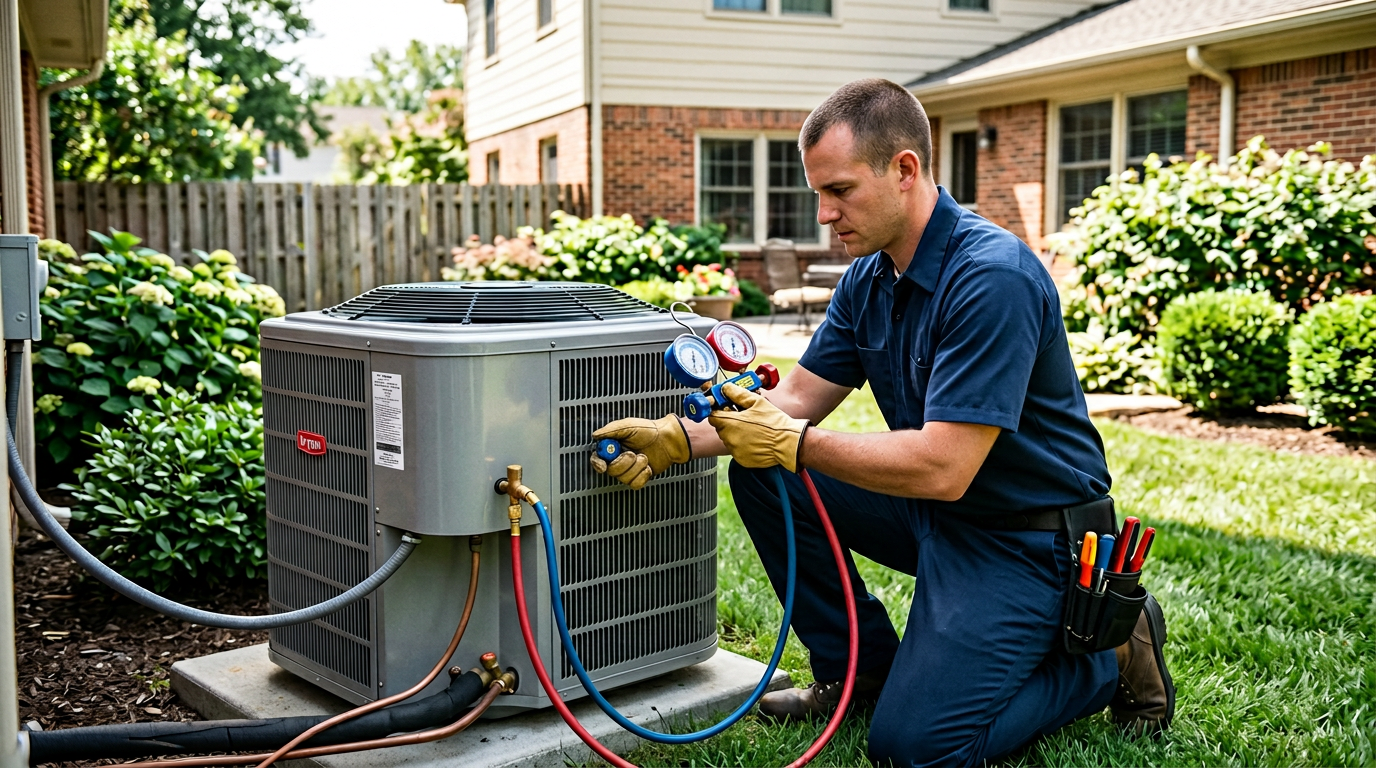
AC Tune-Up in Deer Park, NY: Keep Your System Ready for the Season
A yearly tune-up keeps your AC running efficiently and catches small problems in spring, before they turn into expensive repairs in the middle of a July heat wave.
- Insured
- EPA 608 certified
- Written estimates before work begins
- Same-day availability when scheduling allows
- Financing options available
Getting your AC checked before the hot months arrive is one of the more reliable ways to avoid a breakdown when the summer heat peaks and scheduling tends to get tight. A tune-up keeps your system running efficiently and catches issues while they are still small and inexpensive to fix. Pristine Air Heating and Cooling LLC serves homes in Deer Park and throughout Suffolk and Nassau County. Call 631-333-1613 to schedule your tune-up.
Want the full picture? Here's everything a tune-up covers, step by step.
And if you're weighing whether it's worth scheduling every year, we lay out the case plainly.
When You Need an AC Tune-Up
The best time for a tune-up is spring, before cooling season begins. It is also worth scheduling one if your system has been sitting unused for several months, if your energy bills crept up without a clear reason, or if your AC seems to be working harder than it used to. Long Island homes deal with high summer humidity that puts extra demand on cooling equipment, and a system that has not been serviced recently may be running less efficiently than you realize.
Your system usually gives you warning signs before it quits. Watch for warm or uneven air from the vents, where one room feels fine and another feels stuffy. Listen for grinding, clicking, or buzzing at startup, which often points to a worn part. Pay attention to a higher electric bill with no change in how you use the system, since that means the equipment is working harder than it should. Short cycling — where the AC runs briefly and shuts off repeatedly — is another flag, and so is a musty or stale smell when the system runs, which usually means buildup inside the air handler or ductwork. If something feels off and you are not sure it warrants a call, it is usually worth mentioning. The earlier you reach out, the more options you have.
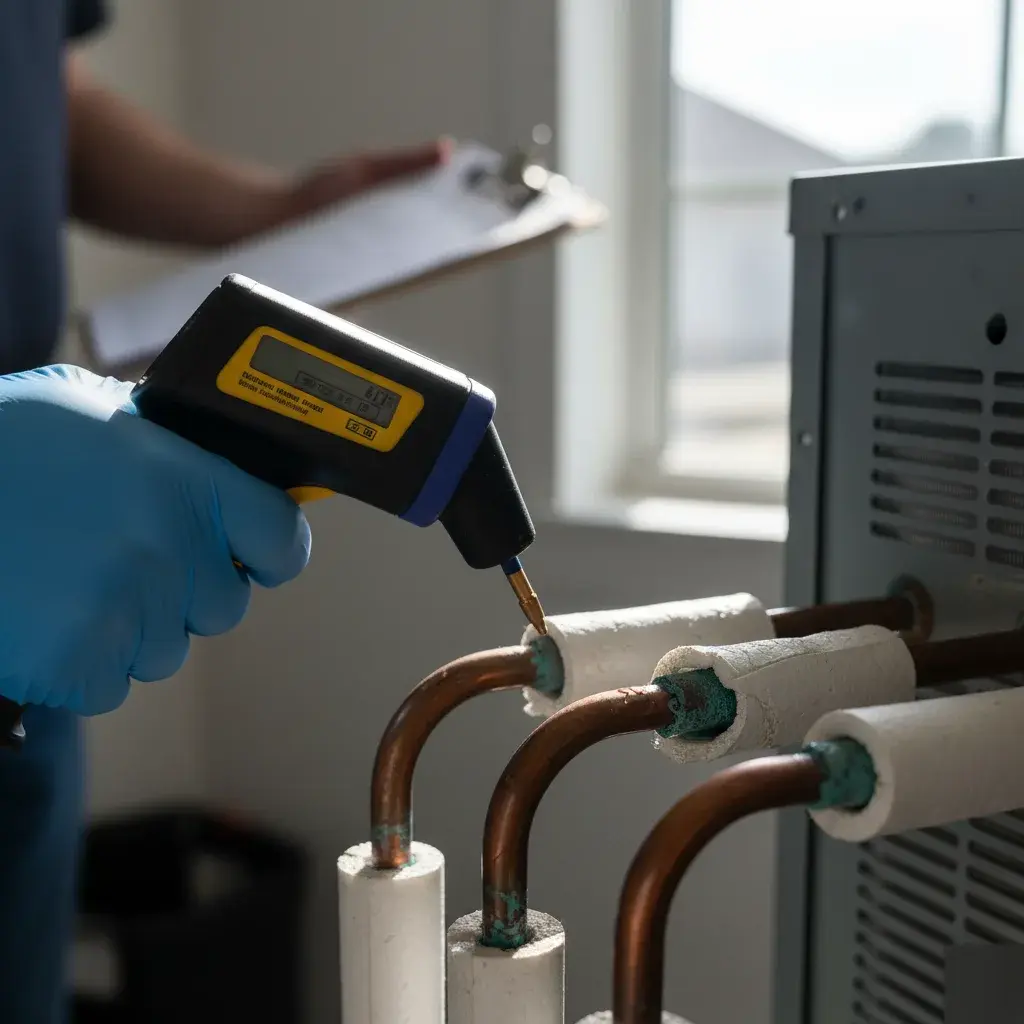
What a Professional AC Tune-Up Actually Covers
A lot of people think a tune-up is changing a filter and calling it done. It covers far more ground. When our team arrives at a home in Deer Park, we work through the system, checking key components that affect cooling, airflow, and safety. A proper tune-up includes:
- Checking thermostat calibration to confirm it reads the right temperature
- Inspecting and tightening electrical connections at the condenser and air handler
- Measuring refrigerant levels and checking for signs of a leak
- Cleaning the condenser coils and clearing debris from around the outdoor unit
- Testing the capacitor and measuring its output against the rated value
- Inspecting the evaporator coil and drain line for buildup or blockages
- Measuring airflow at the supply and return vents
- Running the system through a full cooling cycle and recording operating temperatures
That last step matters more than people realize. We measure the temperature split between supply and return air, and if that number is off, something is wrong — whether it is low refrigerant, a dirty coil, or ductwork losing air in the crawl space. We do not guess; we measure. It is common to find at least one small issue during a tune-up, whether a weak capacitor, a drain line beginning to restrict, or a refrigerant level that is slightly low. These are manageable fixes in spring. Left alone through a Long Island summer, they tend to grow. Our EPA 608 certified technicians write down exactly what they find, give you a written estimate for anything that needs attention, and let you decide. For a clear breakdown of what a thorough seasonal check should include, the ENERGY STAR maintenance checklist is a useful, non-commercial reference.
Our AC Tune-Up Process: Capacitor Testing and Refrigerant Checks

Two parts of the tune-up tend to save homeowners the most grief. The first is capacitor testing. The capacitor stores and delivers the electrical charge that starts your compressor and keeps the fan spinning. It rarely fails all at once — it weakens slowly over months, drawing more power and straining the compressor the whole time. A weak capacitor is one of the more common causes of the short cycling calls we receive. During the tune-up, we pull the capacitor and test it with a multimeter against its rated value, looking for a reading more than five percent low, visible bulging or leaking, or burn marks on the terminals. A capacitor that tests weak today can fail later under heavy use. Catching it does not take long during a scheduled visit and protects the most expensive part of your system.
The second is refrigerant. If we find the charge is low, that is not something that happens on its own — your AC is a sealed system, so a low level means a leak somewhere, often a pinhole in the coil, a worn service valve, or a corroded line set. When we find it, we measure the exact charge, perform leak detection to pinpoint the source, explain what we found, and give you a written estimate for the repair before recharging to the correct level. Topping off refrigerant without finding the leak is only a temporary patch before the level drops again. We find the source, fix it, then recharge — because that is the only way it holds.
AC Tune-Up Cost in Deer Park
Tune-up pricing is straightforward. The cost covers the inspection, cleaning, and testing of your system. If we find anything that needs a repair or a part replacement, we give you a separate written estimate before doing anything additional. You will know what you are spending before we move forward.
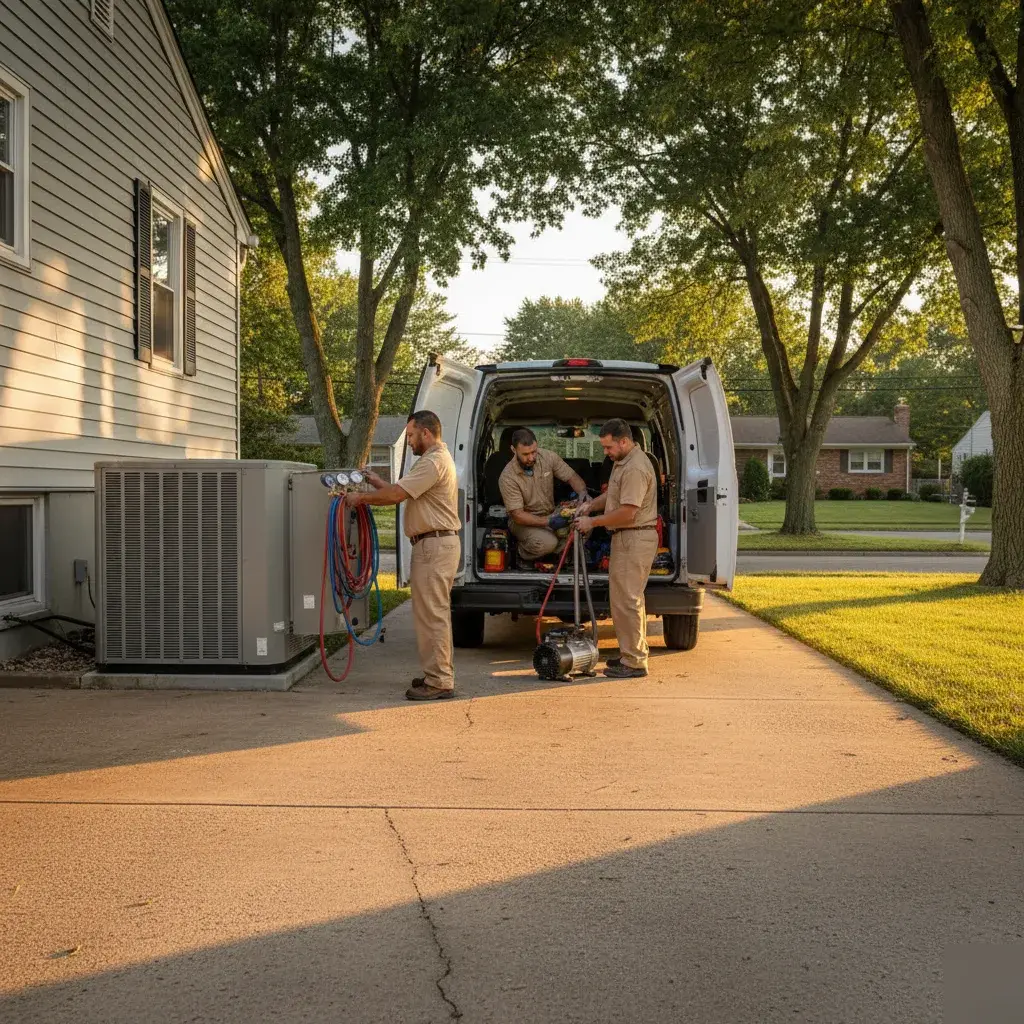
Older Deer Park Homes, Retrofitted Ductwork, and Your Written Summary
Many older Deer Park homes have ductwork that was retrofitted for central air rather than designed for it from the start. Those layouts often run less efficiently than newer construction, which means there is less margin for error when the system already works harder than it should. Annual tune-ups matter more in these homes because small issues — a weak capacitor, a clogging drain line, or airflow loss in the crawl space — can turn into breakdowns faster when the equipment is already at a disadvantage.
At the end of every visit, you get a written summary of what we checked, what we found, and what we recommend — not a verbal rundown you might forget an hour later. That record helps you track the system year over year and decide on repairs with clear information in hand.
How Long Island Humidity Changes What Your Tune-Up Must Include
A tune-up checklist built for a dry climate misses half the problems we actually find here. Deer Park sits in Long Island's humid zone, where summer dew points regularly push past 70 degrees, and that moisture changes how your system wears down. Your AC does not just cool air — it pulls moisture out of it — so during a prolonged humid stretch the evaporator coil works overtime as a dehumidifier. That creates the right conditions for mold, algae buildup, and clogged condensate drain lines, which we clear regularly during Deer Park summers, often for homeowners who had no idea the line was backing up until water pooled near the air handler.
High humidity also forces longer run times, which means more stress on capacitors, contactors, and the compressor. Because of that, our process here includes steps that are not standard in drier regions: a condensate drain line flush and inspection for algae, an evaporator coil check for biological buildup, refrigerant verification since humidity can mask low-charge symptoms, and thermostat calibration to confirm it reads conditions accurately. A thermostat that tracks temperature but misses humidity can leave the house feeling clammy even when the wall says 72. Your AC works harder here than in most places, and your tune-up should reflect that.
Related Services
If symptoms need a deeper look first, start with an AC diagnostic. If the tune-up turns up an issue, we handle the repair from there, whether that is AC capacitor replacement, refrigerant leak repair, or AC short cycling repair. Return to our Air Conditioning Repair Service hub. For more on upkeep, see is annual HVAC maintenance worth it? and what regular AC maintenance includes.
Why Choose Us
Pristine Air Heating and Cooling LLC is insured, and our technicians are EPA 608 certified. We document what we find and give you a written record of the visit. We do not push repairs you do not need; if your system looks good, we tell you that directly. Local customers in Deer Park and nearby towns have reviewed our work, and we offer same-day availability when scheduling allows for repairs we uncover, plus financing options on larger jobs.
Common Questions
- How often should I schedule an AC tune-up in Deer Park?
- Once a year is right for most homes, and spring is the best time — before humidity climbs and schedules fill up across the area. Long Island summers are hard on AC systems; longer run times, high dew points, and constant moisture wear parts faster than people expect. Annual tune-ups catch that wear early.
- What happens if I skip a tune-up for a season or two?
- Small problems get bigger fast. A loose connection can become a failed capacitor; a slow drain line backs up and causes water damage near the air handler. The repair almost always costs more than the tune-up would have. Catching problems early keeps the options open.
- Does Deer Park's humidity make tune-ups more involved?
- Yes. Dew points past 70 degrees cause algae in drain lines, mold on coils, and extra stress on electrical parts. Our process here adds a drain-line flush, a coil inspection for biological buildup, and refrigerant verification, because humidity can mask low-charge symptoms.
- What should I do before the technician arrives?
- Clear about two feet around the outdoor condenser of debris, plants, and stored items. Inside, make sure the air handler and filter slot are reachable, and set the thermostat to cooling mode. We handle everything else, including the full cooling-cycle test.
- Can a tune-up actually prevent an emergency repair call in summer?
- It can. We have found capacitors testing well below their rated value during routine spring visits, weeks before they would have failed on a hot day. Many of the breakdowns we see in July and August trace back to something a spring tune-up would have caught.
- How do I know if what I am noticing is worth calling about?
- If something feels off, call. Warm spots in one room, a faint musty smell, or a bill that jumped without a change in usage are all real warning signs. The earlier you call, the more options you have and the simpler the fix tends to be.
- Why do older Deer Park homes need maintenance more often, not less?
- Many older Deer Park homes have ductwork retrofitted for central air rather than designed for it. Decades of wear and less efficient layouts mean these systems already work harder than newer construction. Annual service matters more for these homes because there is less margin for error when the system already runs at a disadvantage.
- What do I get at the end of the visit?
- A written summary of everything we checked, what we found, and what we recommend — not a verbal rundown you might forget an hour later. If we found a worn capacitor or a drain line beginning to clog, it is documented so you can make an informed decision and track the system year over year.
Get your AC ready before the heat arrives. Call Pristine Air Heating and Cooling LLC at 631-333-1613 to schedule your tune-up. We serve Deer Park and the surrounding communities across Suffolk County and Nassau County.