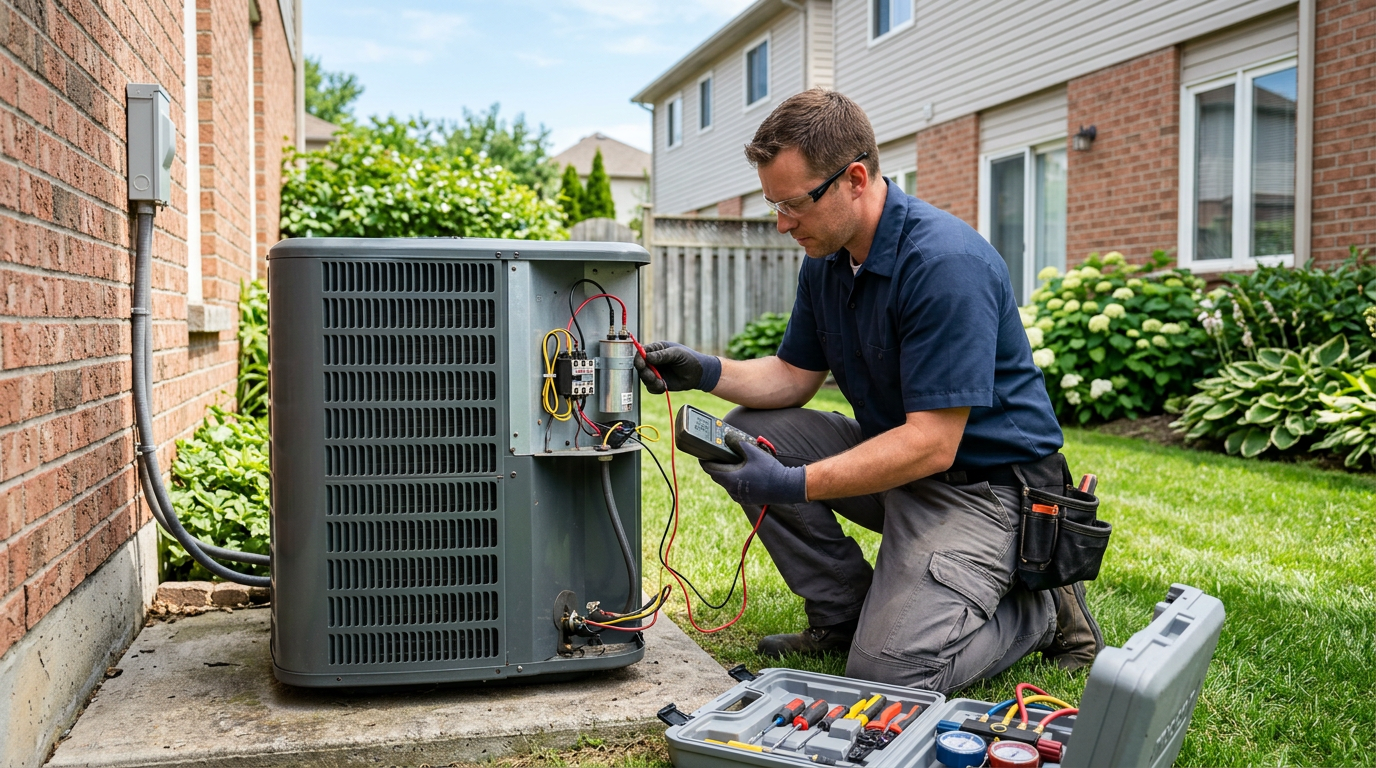
AC Capacitor Replacement in Deer Park, NY
If your AC hums but will not start, or the fan will not spin, a failed capacitor is one of the more common causes — and one of the quicker repairs we handle.
- Insured
- Written estimates before work begins
- Same-day availability when scheduling allows
- Financing options available
The capacitor is a small part, but your AC cannot start without it. It stores electrical energy and releases it in a burst to get the compressor and fan motors moving. When it fails, the unit may hum, click, or just sit there without turning on.
Pristine Air Heating and Cooling LLC replaces AC capacitors across Deer Park and the surrounding Suffolk and Nassau County towns. We confirm the failure with a meter, replace the part with one matched to your unit, and verify the system runs correctly before we leave. Call 631-333-1613 to schedule a visit.
Warning Signs Your AC Capacitor Is Failing
A bad capacitor typically gives you warning signs before it quits completely. The trick is recognizing them before you are stuck in a hot house on a July afternoon. These are the symptoms we see frequently:
- The outdoor unit hums but the fan will not spin
- The AC starts, runs for a few seconds, then shuts off
- A burning or chemical smell near the outdoor unit
- Energy bills that jumped with no clear reason
- The system taking longer and longer to cool the home
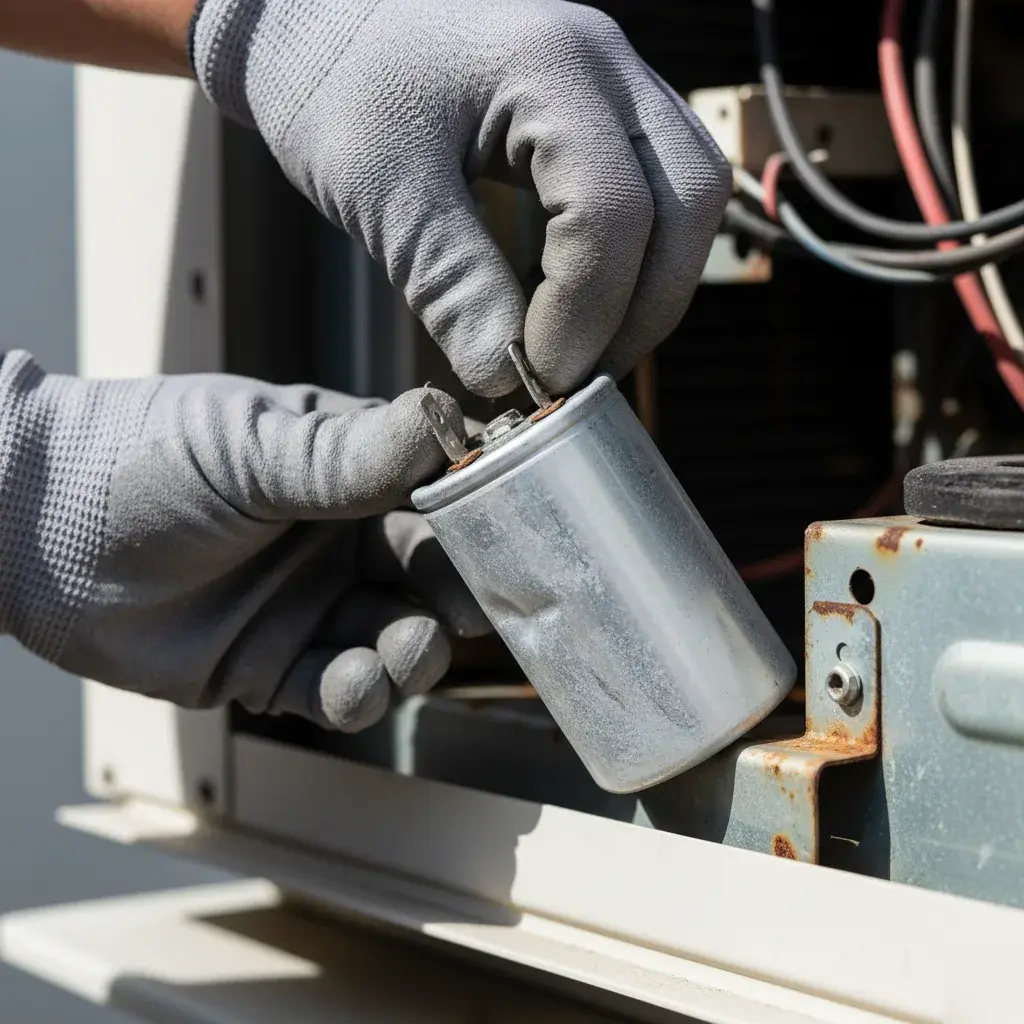
When we pull a failed capacitor, you can often see the top of it swollen like a balloon — a clear giveaway. Many homeowners describe their AC acting oddly for weeks first: short cycling on and off, blowing warm air sometimes and cold air other times. That inconsistency often points back to a capacitor losing its charge. The bigger risk is not the electric bill, though. A weak capacitor forces the compressor to work harder on every cycle, and over time that strain can damage the compressor itself — a far more expensive repair. Catching it early often prevents a compressor replacement down the road.
Why Long Island Summers Wear Capacitors Out Faster
Most people never think about the capacitor until it fails, and around here that failure tends to land in July or August when you need cooling the most. Deer Park sits in the path of long, humid Long Island summers, and the AC does not just cool the air — it fights moisture constantly. That extra workload means the capacitor charges and discharges far more often than it would in a drier climate.
Inside the unit, the capacitor stores energy and fires it in bursts many times a day. When outdoor temperatures climb and the humidity holds, it runs hotter than it was designed to, and heat is a primary cause of capacitor degradation. A few conditions speed up the wear: a condenser sitting in direct afternoon sun, restricted airflow from dirty coils or overgrown shrubs, a system that short-cycles for other reasons, and units that have gone more than a year without seasonal maintenance.
Older neighborhoods around Deer Park tend to have units that are ten to fifteen years old, with capacitors already past their expected lifespan. Add a heat wave and the odds are not in your favor. The good news is that capacitor replacement is one of the faster fixes in HVAC work — the part is small, and the job is often straightforward with the right diagnosis and the right component on hand.
What Happens During a Capacitor Replacement Visit
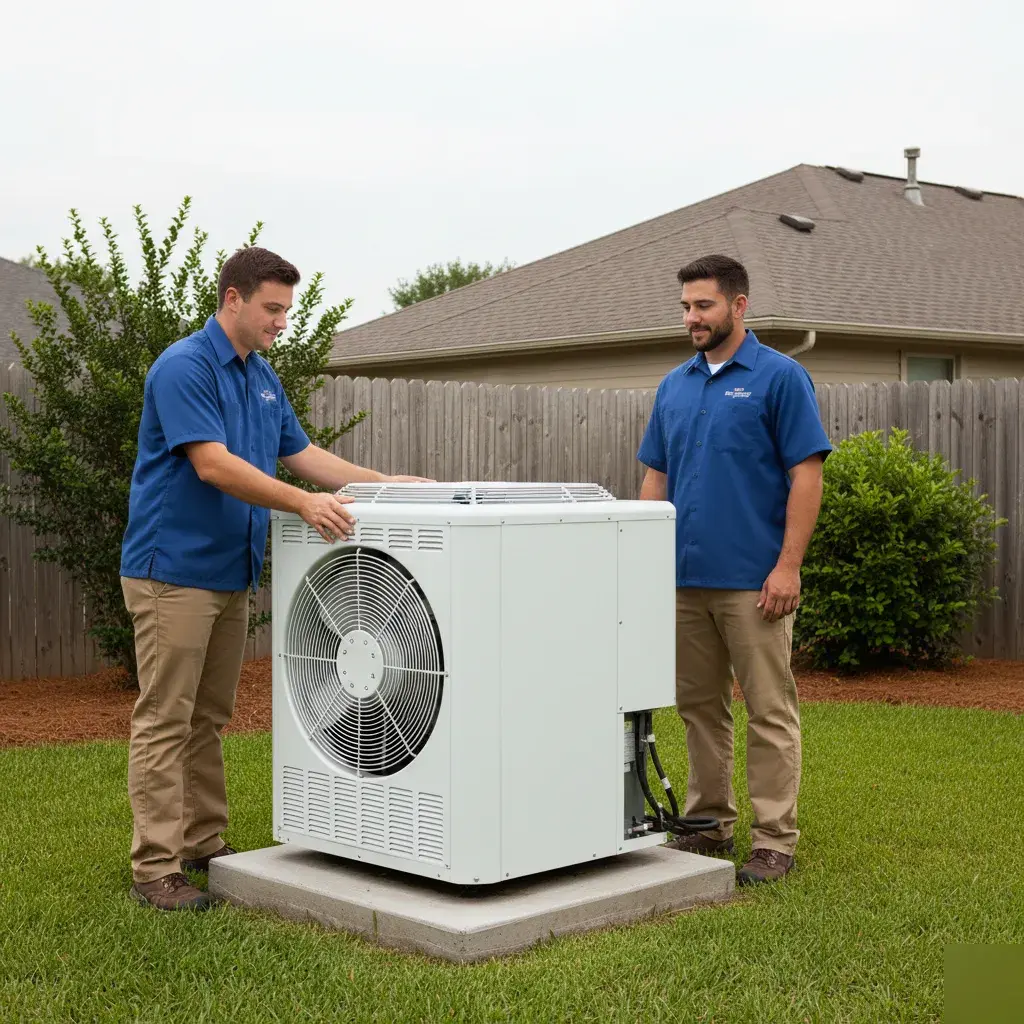
When you schedule the repair, our technician arrives ready to handle the job. Here is how a typical visit goes:
First, we shut off power to the outdoor unit at the disconnect. Capacitors hold a charge even when the system is off, so safe discharge comes before anything else. We pull the access panel and inspect the capacitor for swelling, leaking oil, or burn marks, then test it with a multimeter to confirm the microfarad reading. A healthy capacitor reads within about five percent of its rated value; anything outside that range indicates it is failing or already dead. We photograph the wiring connections before removing the old part so the replacement goes back exactly right, install the new capacitor, restore power, and run the system through a full startup. Finally, we verify the amp draws on the compressor and fan motor to confirm everything is pulling correctly under load.
The process is often completed in a single visit, and much of that time is careful testing rather than guesswork. We keep many commonly needed repair items available when possible, which means a second trip for the part is not always necessary. Replacement capacitors should meet established safety and performance benchmarks — you can review UL capacitor product certification information to see what testing reputable parts are held to before they reach a technician's truck. We also check beyond the capacitor itself: the contactor for pitting, the fan blade for wobble, and the compressor for signs of strain, since a failing capacitor has often been stressing other components before it fully quits. Before we leave, you get a written explanation of what we found and what we did.
Replacing the Capacitor Now Protects Your Compressor
The compressor is the most expensive part of your AC system, and a failing capacitor puts it directly at risk. The capacitor's job is to deliver the jolt that gets the compressor motor spinning. When it weakens, the motor still tries to start but struggles — like turning a key and hearing the engine barely crank. The compressor then draws more current to compensate, that extra current generates heat, and heat is what burns out compressor windings over time.
We see this pattern in Deer Park homes. A humming outdoor unit gets ignored for a few weeks, and by the time someone calls, the compressor has been pushing through strained start cycles in the summer heat. What could have been a straightforward capacitor swap turns into a conversation about compressor replacement instead. A weak capacitor also creates a chain reaction elsewhere: the compressor overheats and trips its thermal overload, the breaker trips from excess amperage, and the contactor burns out faster from repeated failed starts. Replacing the capacitor when the symptoms appear is one of the simpler ways to protect the bigger, costlier parts of your system.
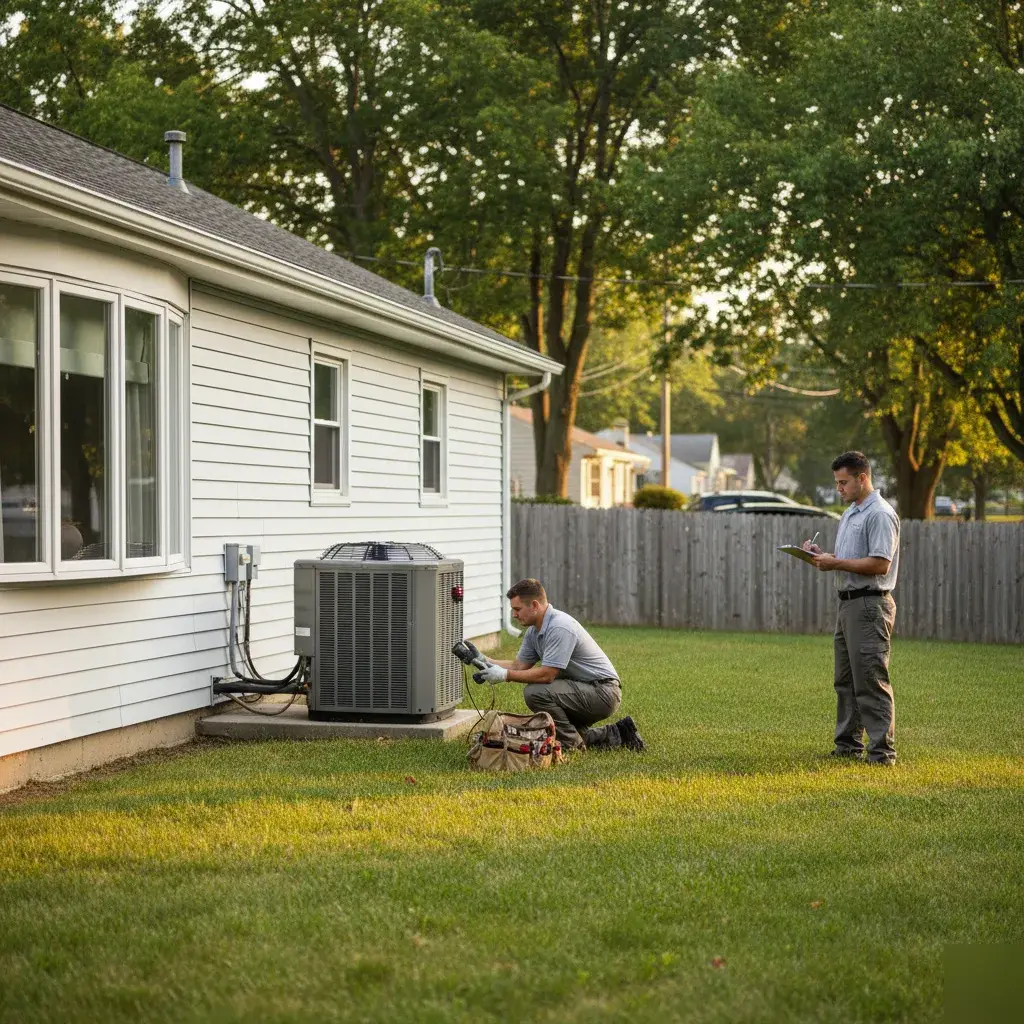
How to Choose an AC Technician in Deer Park
Capacitor work involves electrical components that hold a charge even after the unit is powered off — enough voltage to cause serious injury — so this is not a job for a handyman. You want a technician who carries proper insurance, knows how to safely discharge a capacitor, and runs a real diagnostic rather than swapping a part and hoping.
A few things worth looking for before you book anyone: proof of liability insurance, a willingness to provide a written estimate before starting work, same-day availability when scheduling allows, and clear answers when you ask about the diagnostic process. A good technician tests the capacitor with a multimeter, checks the microfarad rating against the manufacturer's spec, confirms the new part matches before installing it, and verifies the repair held by monitoring the startup cycle and amp draws afterward. We put the scope of work on paper before we start on every call, so there are no surprises when the job is done.
Related Services
If symptoms overlap with other issues, an AC diagnostic can confirm the cause. For short cycling, see our AC short cycling repair page. Regular AC tune-up helps catch capacitor wear before it fails. For the full range of cooling work, visit our Air Conditioning Repair Service page.
Why Choose Us
Pristine Air Heating and Cooling LLC is insured and serves homeowners across Deer Park and Suffolk County. We provide a written estimate on every job before we start, use parts matched to your specific equipment, and confirm the system runs correctly after the repair rather than turning it on and leaving. We offer same-day availability when scheduling allows, financing options are available, and our hours are Monday through Saturday, 8 to 5, closed Sunday. For the full range of cooling work, see our Air Conditioning Repair Service page.
Common Questions
- How quickly can you get to my home in Deer Park for a capacitor replacement?
- We offer same-day availability when scheduling allows, and summer is our busiest stretch, so calling early in the day helps. We keep many commonly needed repair items available when possible, which often means no second trip for the part. Many capacitor jobs are completed in a single visit once we arrive.
- What should I do while I wait for the technician to arrive?
- Turn your AC off at the thermostat. Running a unit with a failing capacitor puts extra strain on the compressor and can turn a small repair into a much bigger one. Keep the area around the outdoor unit clear, and do not try to open the access panel yourself — capacitors hold a dangerous charge even when the system is powered down.
- Why do capacitors seem to fail so often on older Deer Park homes?
- Many homes here have AC units that are ten to fifteen years old, with capacitors already past their expected lifespan. Add Long Island's summer humidity and heat, and they wear out faster. Systems in humid areas run longer cycles, so the capacitor charges and discharges more often than it would in a drier climate. Age plus heat plus humidity is a tough combination.
- My AC hums but the fan will not spin — is that definitely the capacitor?
- That symptom points to a failing capacitor in many cases. The capacitor gives the fan motor the burst of energy it needs to start, and without it the motor hums but cannot get moving. We confirm with a multimeter before replacing anything. A healthy capacitor reads within about five percent of its rated microfarad value; outside that range indicates the part has failed or is failing.
- Will replacing the capacitor fix my AC completely, or are there other problems to check?
- Replacing the capacitor often gets the system running again, but we always check beyond the one part. A weak capacitor can stress the compressor and fan motor before it fully fails, so we inspect the contactor, check the fan blade, and listen to the compressor during startup. Catching a stressed compressor early is the difference between a simple repair and a costly one later.
- How do I know if my AC is short cycling because of the capacitor or something else?
- Short cycling — starting, running briefly, then shutting off — can come from several causes, and a failing capacitor is among the more common ones we see in Deer Park. The system struggles to hold a full run cycle as the capacitor loses its charge. We test the capacitor reading and check amp draws on the compressor and fan motor to confirm whether it is the root cause or part of a bigger issue.
If your AC hums but will not start, call Pristine Air Heating and Cooling LLC at 631-333-1613. We serve Deer Park, Suffolk County, and Nassau County, with written estimates before any work begins.