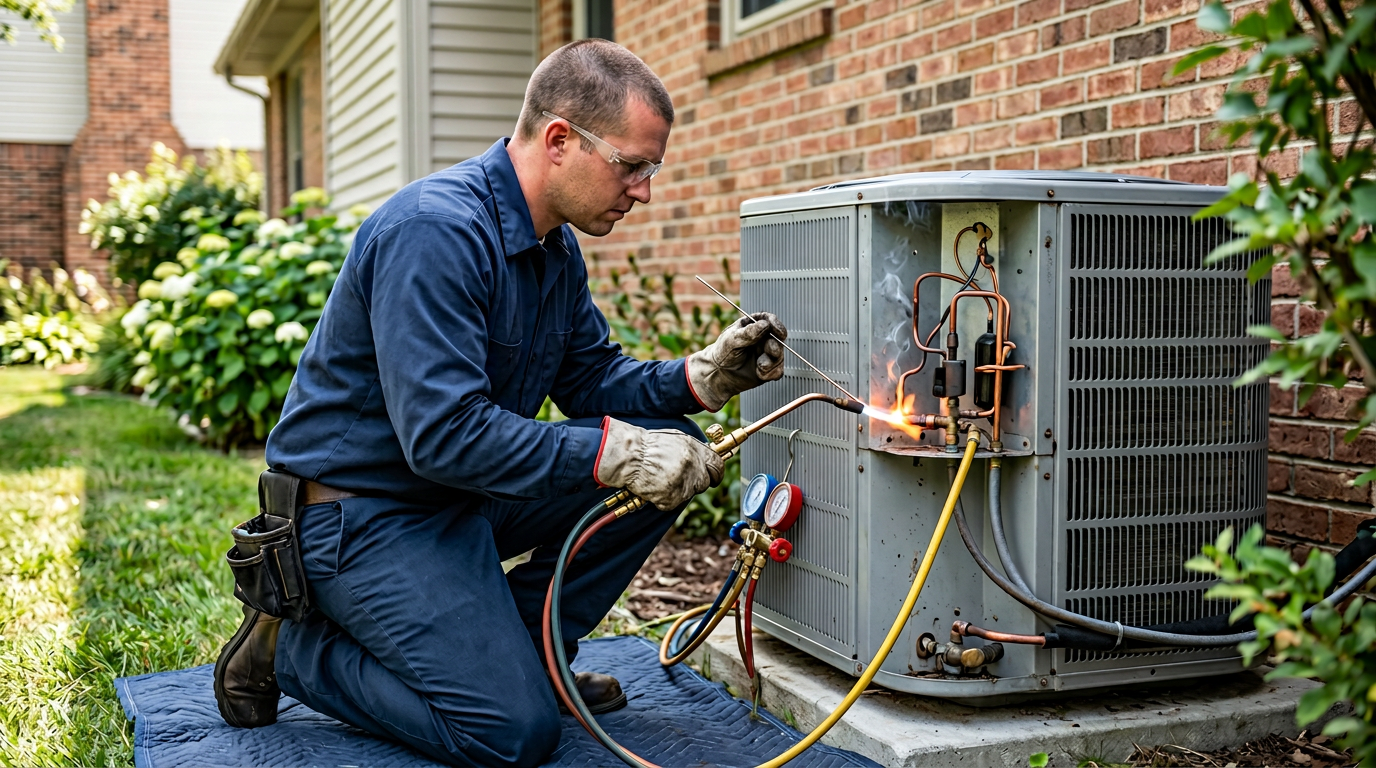
Refrigerant Leak Repair in Deer Park, NY
A refrigerant leak will not fix itself. The sooner it is repaired at the source, the better your AC cools and the longer your compressor lasts.
- Insured
- EPA 608 certified
- Written estimates before work begins
- Same-day availability when scheduling allows
- Financing options available
Once a refrigerant leak is found, it has to be repaired before your system can work properly again. Running an AC on low refrigerant strains the compressor and leaves you with weak cooling, and simply adding more refrigerant only delays the problem. The charge will escape through the same opening, and you end up back where you started.
Pristine Air Heating and Cooling LLC repairs refrigerant leaks across Deer Park and the surrounding Suffolk and Nassau County towns. We fix the leak at the source, evacuate the system, and recharge it to the manufacturer's specified level — all handled by EPA 608 certified technicians. Call 631-333-1613 to set up a visit.
Signs You Need Refrigerant Leak Repair
Your AC runs all day but the house never cools down. That is one of the calls we hear often during a Deer Park summer. The system still turns on and the fan still blows, but something feels off, and it gets worse over a few days or weeks.
The signs that point to a leak are usually some combination of these:
- Warm or lukewarm air from the vents even with the thermostat set low
- Ice forming on the refrigerant lines or the evaporator coil
- A hissing or bubbling sound near the indoor or outdoor unit
- Higher electric bills with no change in how you use the system
- The system running in short bursts, cycling on and off without reaching the set temperature
That last one gets misread often. Homeowners assume the thermostat is broken when the system short-cycles, but low refrigerant causing the unit to shut down on a safety limit is a common culprit. Another telling sign is an AC that cools fine at night but cannot keep up during the day. The system handles mild demand and then falls apart when a Deer Park afternoon pushes into the 90s. That is not the unit being too small — it is losing the refrigerant it needs to do its job. A small leak now becomes a failed compressor later, which is a much bigger conversation.
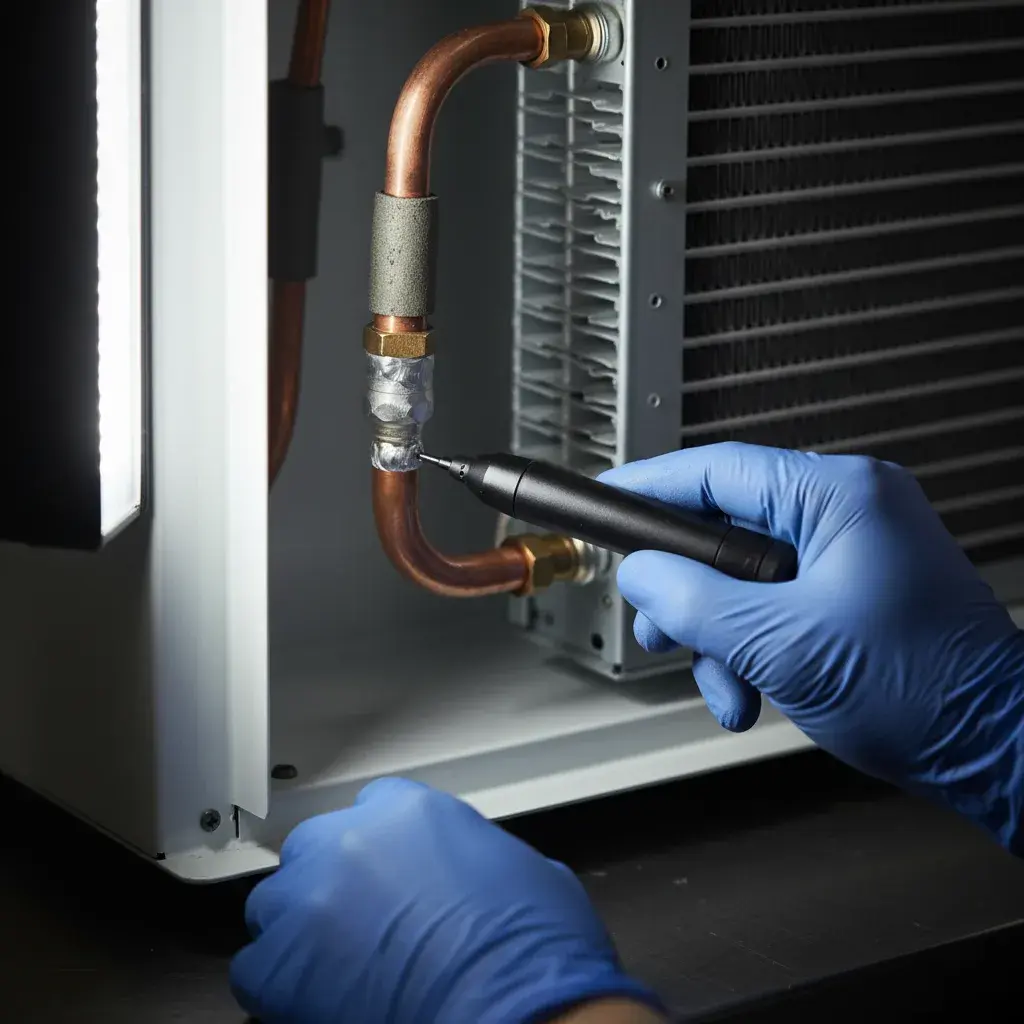
How We Locate and Repair a Refrigerant Leak
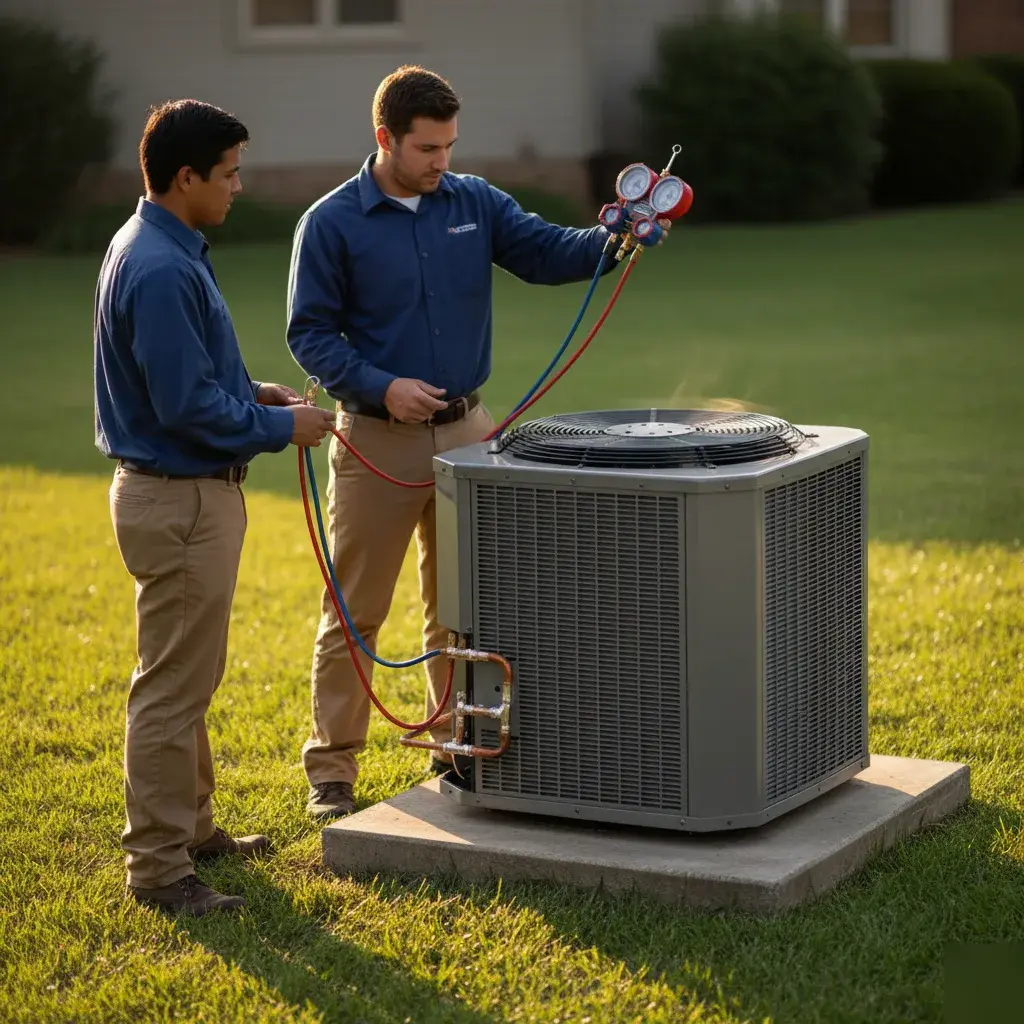
Finding a leak is not guesswork. It is a step-by-step process, and skipping any part of it leads to callbacks and wasted money. Our technicians follow the same sequence on each call.
We start with a visual inspection of every joint, fitting, and connection on the coil and line set — oil stains around copper fittings tell us a lot before a tool comes out. Then we run a refrigerant-specific electronic detector along the evaporator coil, condenser coil, and service valves to pick up trace amounts you would never see or smell. Next we isolate sections of the system and pressurize them with dry nitrogen; if the pressure drops, we have narrowed down where the leak is. We confirm the exact spot with bubble solution on the suspected joint or fitting, then make the repair. Depending on location, that might mean brazing a copper joint, replacing a section of line set, or swapping a leaking Schrader valve core.
Once the repair holds pressure, we pull a deep vacuum to remove moisture and air, then weigh in the correct refrigerant charge to manufacturer specs. A proper repair means verifying the fix holds — we do not patch it and walk away. After recharging, we monitor the system's pressures and temperatures and verify readings before finishing. Skipping the nitrogen test is how people end up paying for the same repair twice, and the additional time is worth getting it right the first time. The handling of refrigerants is governed by federal regulations — you can review the EPA Section 608 refrigerant handling requirements for an overview of what certified technicians are required to follow.
Recharging Without Repairing Is Only a Short-Term Fix
A recharge alone treats the symptom, not the cause. Refrigerant does not get used up the way fuel does. It circulates in a sealed loop, so if the level keeps dropping, there is an unrepaired leak. Adding more buys a few weeks of cooling at best, while the underlying problem keeps getting worse.
Every recharge without a real repair puts more stress on the compressor and lets more moisture into the lines, where it turns acidic and eats at the copper. A homeowner who tops off every summer is often heading toward a compressor replacement that costs far more than the leak repair would have. Fixing it at the source protects the most expensive part of your system and stops the cycle of paying again and again for the same lost charge.
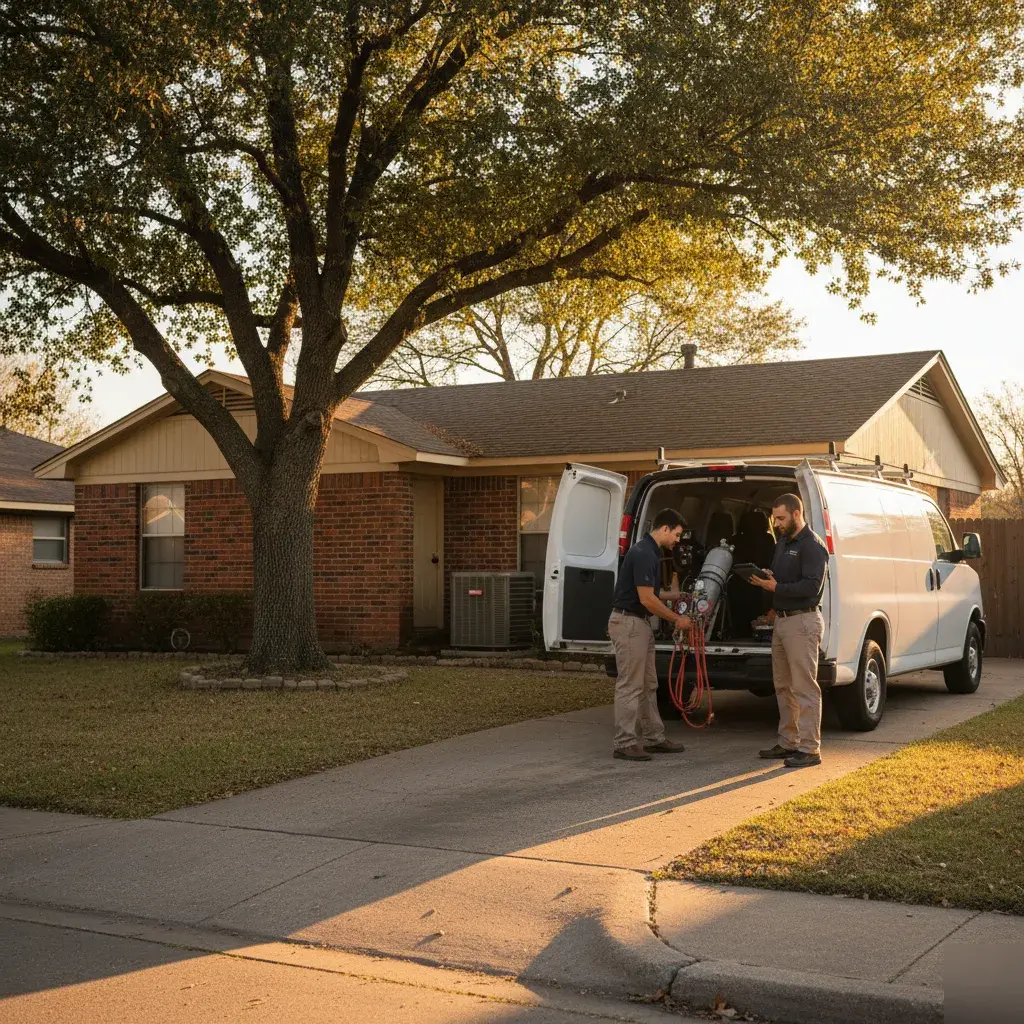
Older Homes and R-22 Systems Need a Different Conversation
Plenty of Deer Park homes still run older AC systems, and many of those use R-22 refrigerant, which has been phased out and is no longer manufactured. When an R-22 system develops a leak, the cost of recharging climbs every year as supply tightens. That changes the math.
On an older system, we will repair the leak when the repair makes sense, but we will also be honest about where the equipment stands. If a unit is fifteen years old, running R-22, and showing wear across the coil, line set, and compressor, repeated leak repairs may be money better spent toward a newer system. We lay out the options, give you a written estimate, and let you decide rather than pushing the bigger ticket by default. When a full replacement is the smarter path, our central AC replacement service can walk you through it.
Related Services
If you have not had the leak located yet, start with our refrigerant leak detection service. When the leak points to coil failure, see evaporator coil replacement. When short cycling is part of the picture, see our AC short cycling repair page. For the full range of cooling work, visit our Air Conditioning Repair Service page. For background on sealers versus proper repair, see do refrigerant leak sealers work?.
Why Choose Us
Pristine Air Heating and Cooling LLC is insured and EPA 608 certified, which means refrigerant is handled safely and correctly from recovery to recharge. Every repair comes with a written estimate before we touch anything, and you approve the work first. We offer same-day availability when scheduling allows, financing options are available for larger repairs, and our hours are Monday through Saturday, 8 to 5, closed Sunday. If you have not had the leak located yet, start with our refrigerant leak detection service, and for the full range of cooling work, see our Air Conditioning Repair Service page.
Common Questions
- How long does a refrigerant leak repair take from start to finish?
- Many accessible repairs can be completed in a single visit, though timing depends on the leak location and system condition — we explain the expected timeline in the written estimate before work starts. The leak search, nitrogen pressure test, and the repair itself each take time, and after the repair holds, we pull a vacuum and recharge the system. Rushing any step means missing the actual problem and coming back to do it again.
- Why does my AC keep needing refrigerant added every summer?
- If your system needs a top-off every year, it has a leak that was never fixed. Refrigerant does not wear out or disappear in a sealed system. Someone added charge without finding the source, so it leaked right back out. Each recharge without a real repair puts more stress on the compressor and moves you closer to a much bigger job.
- Does Deer Park's heat and humidity make refrigerant leaks worse?
- The climate here makes leaks develop faster and harder to ignore. Summers push into the 90s for stretches, and a system with even a small leak cannot keep up with that demand. High humidity also speeds up corrosion on copper coils and fittings. A small pinhole that is manageable in spring can become a real problem by July.
- What should I expect when a technician comes out for a refrigerant leak repair?
- The technician starts with a visual check of the line set, coil, and fittings, then runs electronic leak detection followed by a nitrogen pressure test to confirm the location. Once the leak is found and repaired, we evacuate the system and recharge it to manufacturer specs. We check pressures and temperatures and verify readings before finishing.
- Can ice on my AC lines mean something other than a refrigerant leak?
- Ice typically points to low refrigerant, but a dirty air filter or a blocked return vent can cause it too. Low refrigerant drops the pressure inside the evaporator coil, which drops the coil temperature below freezing, and moisture in the air freezes onto it. In older Deer Park systems, it is often a combination of low charge and restricted airflow. Either way, ice is a sign to call before airflow shuts down completely.
Ready to fix the leak and get your AC cooling again? Call Pristine Air Heating and Cooling LLC at 631-333-1613. We serve Deer Park, Suffolk County, and Nassau County, with written estimates before any work begins.