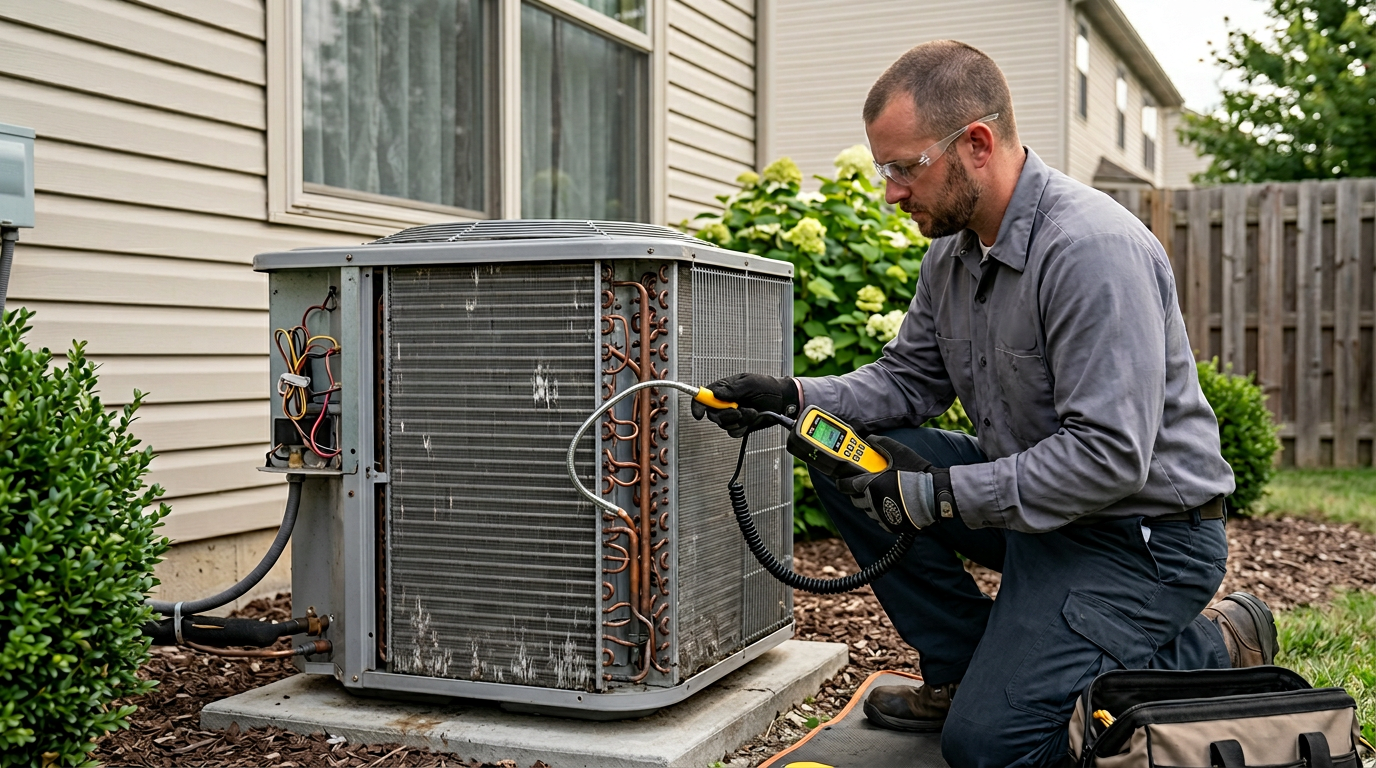
Refrigerant Leak Detection in Deer Park, NY
Your AC runs all day but the house never quite cools. A slow refrigerant leak is one common reason, and finding it early protects your compressor.
- Insured
- EPA 608 certified
- Written estimates before work begins
- Same-day availability when scheduling allows
- Financing options available
When your AC runs nonstop and the house still sits warm, low refrigerant is one of the first things worth checking. Refrigerant moves through a sealed system, so if the level has dropped, it did not simply burn off. There is a leak somewhere, and the only real fix starts with finding exactly where it is.
Pristine Air Heating and Cooling LLC handles refrigerant leak detection across Deer Park and the surrounding Suffolk and Nassau County towns. Our EPA 608 certified technicians test the system, pinpoint the leak, and give you a written estimate before any repair work begins. Call 631-333-1613 to schedule a visit.
Warning Signs Your AC Has a Refrigerant Leak
Many homeowners do not call about a leak directly. They call because something feels off. The house will not cool down, the electric bill jumped with no change in usage, or there is a faint hissing near the outdoor unit. Those are the moments worth paying attention to.
The signs tend to be a consistent handful:
- Warm air from the vents even with the thermostat set low and the system running
- Ice forming on the evaporator coil or along the refrigerant lines near the air handler
- A hissing or bubbling sound from the indoor or outdoor unit
- Higher energy bills with no change in how much you run the AC
- The system running constantly but never reaching the set temperature
The ice one confuses people the most. You would think ice means things are too cold, but it usually means the opposite. Low refrigerant drops the pressure inside the evaporator coil, the coil gets too cold, moisture in the air freezes onto it, and that ice blocks airflow. The system then works harder and delivers less. A leak does not resolve on its own, and waiting only puts more strain on the compressor — the most expensive part to replace.
Refrigerant Leak Detection: Why Low Refrigerant Needs a Real Diagnosis
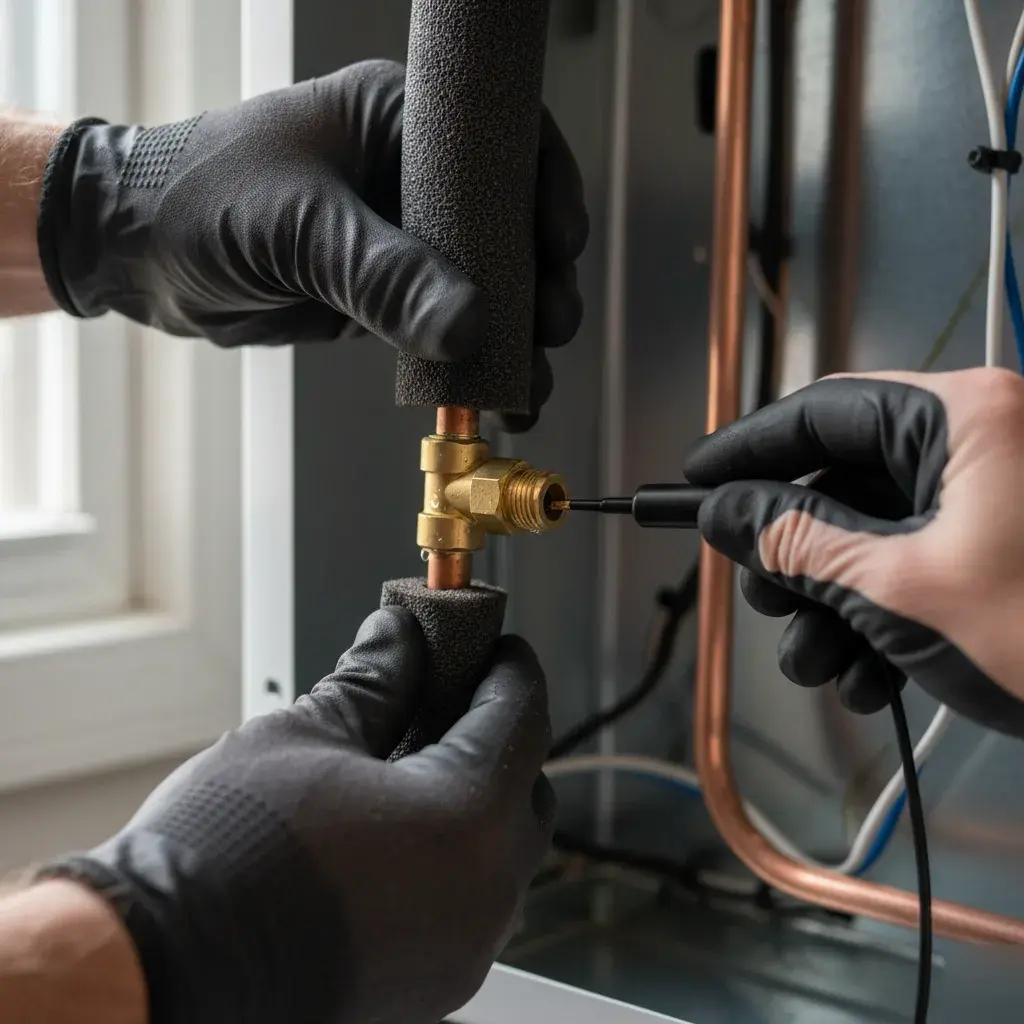
This video explains why low refrigerant should be treated as a diagnostic issue, not just a refill. AC systems are designed to hold refrigerant, so low refrigerant usually means something has allowed it to escape. The video covers common leak locations, including copper line connections, service valves, indoor coils, outdoor coils, and fittings. It also explains why adding refrigerant without finding the source of the loss can lead to the same cooling problem returning. A proper leak detection visit helps locate the issue, explain repair options, and determine whether the system’s age and condition affect the next step.
How Professional Refrigerant Leak Detection Works

We follow the same sequence on each call, because skipping steps is how leaks get missed.
First is a visual inspection of the full system. We check the connection points where leaks tend to start — valve stems, service ports, and the joints around the evaporator and condenser coils. Corrosion and oil staining are usually the first clues. Next come pressure and performance readings, measured against the factory specs for your unit, which confirm whether the charge is actually low. Then we run an electronic leak detector along the lines, coils, and fittings to pick up trace amounts of escaping refrigerant you would never see or smell. For stubborn leaks, we use UV dye or a nitrogen isolation test to narrow the source to an exact spot. Finally, we document what we found and give you a written estimate before any repair begins.
On many residential systems in Deer Park, the leak turns out to be at a brazed joint or inside the evaporator coil. Those are the common weak points. The detection visit often completes in a single visit, though timing depends on system condition and access — we do not rush it. A missed leak means another service call, and getting it right the first time is the whole point. Proper leak testing matters for legal and environmental reasons: releasing refrigerant into the atmosphere violates federal regulations under EPA Section 608 refrigerant handling requirements, and the EPA-hosted Guide to Good Leak Testing illustrates technical leak-testing methods used in proper refrigerant diagnostics.
Why Topping Off Refrigerant Without Finding the Leak Backfires
We hear the same story often. Someone came out last summer, added refrigerant, and the AC worked great for a few weeks. Then it stopped cooling again, so they called, paid, and got another top-off. That cycle can repeat several times before anyone looks for the actual problem.
Every top-off without a repair is a temporary patch, and the real cost runs deeper than the service call. Running low on charge repeatedly makes the compressor work harder and run hotter, which shortens its life. Ice forms on the coil and blocks airflow through the whole house. Energy bills climb as the system runs longer cycles chasing a temperature it cannot reach. Worse, moisture enters the lines through the same opening where refrigerant escapes, and that moisture turns acidic and corrodes copper from the inside out.
A homeowner who has been topped off repeatedly often ends up needing the compressor replaced anyway, after paying for refrigerant that leaked right back out. Finding and fixing the leak early usually costs far less than a compressor replacement. The fix is not more refrigerant. It is finding where it is going.

Older Homes and Legacy Systems Face Higher Leak Risk
A lot of our Deer Park calls come from older Deer Park homes with aging cooling equipment. Those AC systems have been through decades of humidity, outdoor exposure, and seasonal temperature swings, and that takes a real toll on copper lines and solder joints. Older systems tend to lose refrigerant slowly — so slowly you might not notice for a full season — while the AC works harder and harder to keep up.
A few things make legacy equipment more vulnerable: corroded copper lines from years of moisture exposure, weakened solder joints at the coil connections, vibration damage that loosens fittings over time, and aging R-22 systems where small leaks go undetected. R-22 deserves special attention because it has been phased out and is no longer manufactured. When an older unit running R-22 develops a leak, recharging it gets expensive fast, and a proper detection visit helps you understand where the loss is happening before spending money on a recharge that will not last.
If your Deer Park home has a system that is fifteen years old or more, catching problems early is worth the visit rather than waiting for a full breakdown. Our technicians work on these older units regularly across the area and know where to look.
What Comes Next After the Leak Is Found
Finding the leak is half the job. Fixing it correctly is the other half. Once we pinpoint the location, we walk you through what we found in plain language — a corroded coil joint, a fitting that vibrated loose, a section of line that gave out. From there, the repair is handled through our refrigerant leak repair service, where we isolate the damaged section, recover any remaining refrigerant safely, make the repair, pressure test it, and recharge the system to the correct level.
Sometimes the leak points to a larger issue, like an evaporator coil replacement with multiple micro-leaks, where patching one spot will not solve the problem. In that case we will explain why a coil replacement makes more sense. Either way, you get a written estimate before any work starts, and if the right move turns out to be something bigger — like a compressor replacement or a full diagnostic — we explain it clearly and let you make the call.
Related Services
Once the leak is located, repair is handled through our refrigerant leak repair service. If the system needs a broader check, see AC diagnostic, and when the coil or compressor is the weak point we handle evaporator coil replacement and AC compressor replacement. For the full range of cooling work, visit our Air Conditioning Repair Service hub. Wondering about DIY sealers first? Read do refrigerant leak sealers work?.
Why Choose Us
Pristine Air Heating and Cooling LLC is insured, and our technicians are EPA 608 certified for the refrigerant handling this work requires. You get a written diagnostic and a written estimate before any repair begins, and nothing moves forward without your approval. We offer same-day availability when scheduling allows, financing options are available for larger repairs, and our hours are Monday through Saturday, 8 to 5, closed Sunday. For the full range of cooling services, see our Air Conditioning Repair Service page.
Common Questions
- How long does a refrigerant leak detection visit take in Deer Park?
- Many residential leak detection visits can be completed in a single visit. We follow a set sequence — visual inspection, pressure readings, electronic sweep, and dye or nitrogen testing if needed — and timing depends on system condition and access. We do not cut corners to save time, because a missed leak means another visit, and getting it right the first time is always the goal.
- Can I just add refrigerant and skip the leak detection?
- Topping off without finding the leak only buys a few weeks of cooling. Refrigerant circulates in a sealed system, so if the level drops, there is a leak somewhere. Every top-off without a real repair also lets moisture in through the same opening, and that moisture turns into acid that corrodes your copper lines from the inside. Fixing the leak first is the cheaper path in the long run.
- Why is my AC freezing up if it is low on refrigerant?
- Ice on the coil signals low refrigerant, not too much cooling. When the charge drops, pressure inside the evaporator coil falls below normal, the coil gets too cold, and moisture in the air freezes onto it. That ice blocks airflow, so the system works harder and delivers less. It seems backwards, but ice on your lines or air handler is one of the clearer signs of a leak.
- Does Deer Park's heat and humidity make refrigerant leaks worse?
- The local climate does put real stress on AC systems. High humidity means longer run cycles, which adds pressure to refrigerant lines and joints over time. Brazed connections and evaporator coils — common leak points — wear faster when a system runs hard through a Long Island summer, and a slow leak often goes unnoticed until the heat exposes it.
- What should I expect when the technician arrives for leak detection?
- The technician checks every visible connection point first — valve stems, service ports, coil joints — looking for oil stains or corrosion. Then come pressure readings and an electronic sweep along the refrigerant lines. If the leak is stubborn, UV dye or a nitrogen isolation test pinpoints it. Before any repair starts, you get a written summary of what was found.
- Is releasing refrigerant during a repair legal?
- No. Releasing refrigerant into the atmosphere violates federal regulations under EPA Section 608. Refrigerants are regulated substances that must be handled by EPA 608 certified technicians, and that requirement applies to every residential repair, not just commercial properties. Proper detection and repair keeps your system compliant and protects the environment.
If your AC runs but will not cool the house, call Pristine Air Heating and Cooling LLC at 631-333-1613. We serve Deer Park, Suffolk County, and Nassau County, with written estimates before any work begins.