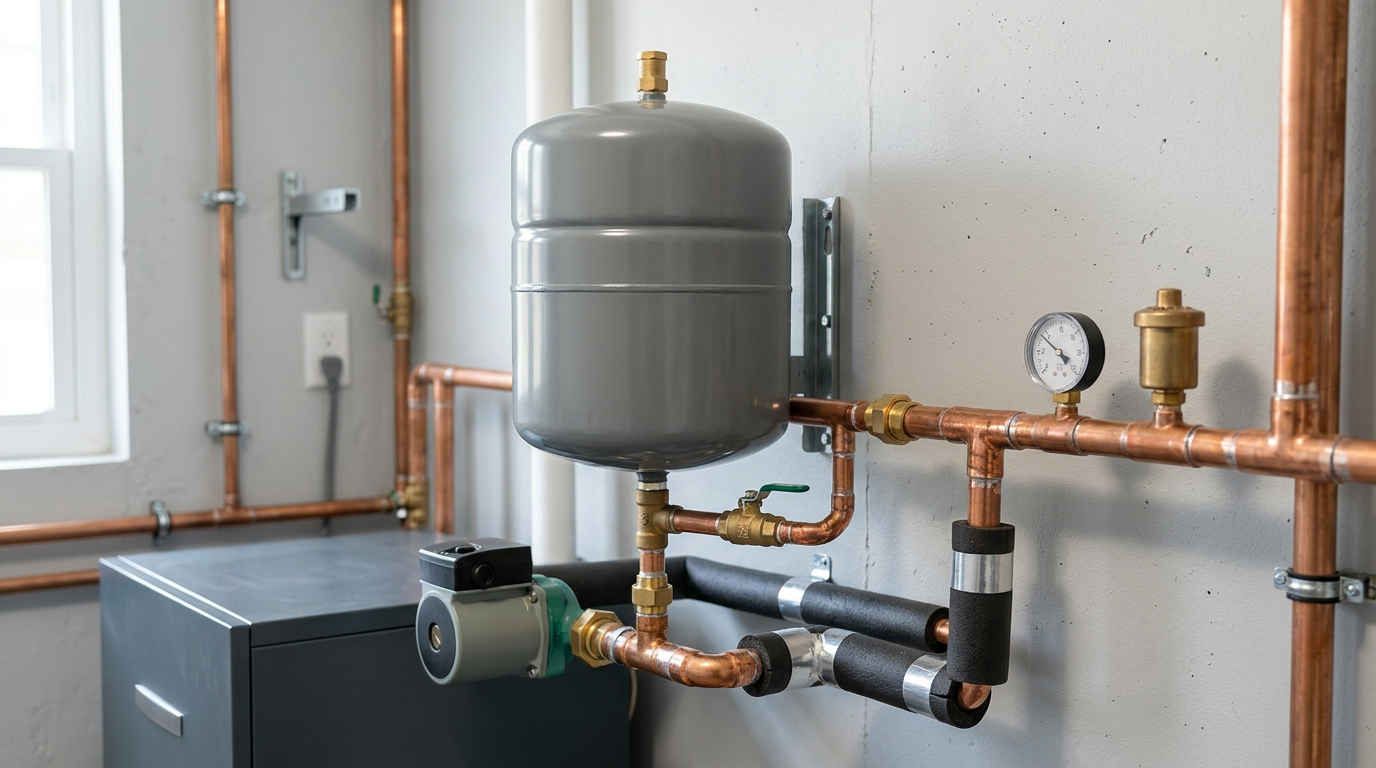
Boiler Expansion Tank Replacement in Deer Park, NY
A failed expansion tank causes pressure problems that stress your whole boiler. We replace it with a properly sized tank and restore normal operation.
- Insured
- Written estimates before work begins
- Same-day availability when scheduling allows
- Financing options available
- Local reviews
The expansion tank is one of the quietest parts of your boiler until it fails. Its job is to absorb the pressure changes that happen when water heats up and expands. When the tank stops doing that, pressure has nowhere to go, and the effects show up across the rest of the system — often as a dripping relief valve or a boiler that keeps shutting off on its own.
In Deer Park's older homes, many of which run hydronic heat, a failing expansion tank is a common winter problem. These systems have often been in place for decades, and the expansion tank is one of those components that quietly ages out. Pristine Air Heating and Cooling LLC replaces expansion tanks across Deer Park and Long Island, sized correctly for your system. Call us at 631-333-1613 to schedule.
When You Need Boiler Expansion Tank Replacement
The most common sign is pressure that swings too high or too low. Your boiler's pressure gauge should sit in a steady range during normal operation. When the expansion tank fails, you may see the pressure climb sharply as the system heats, then drop back as it cools, rather than holding steady through the cycle.
A dripping pressure relief valve is another telltale sign. When the expansion tank can no longer absorb the expanding water, pressure builds until the relief valve opens to protect the system. If you see water near the relief valve or notice it weeping, the expansion tank is a prime suspect. A boiler that shuts off on high pressure, or a tank that feels heavy and waterlogged when you tap it, point in the same direction.
Older steel tanks rust internally over time. Bladder-type tanks lose their air charge. Once either happens, the tank can no longer cushion the system, and the pressure problems follow.
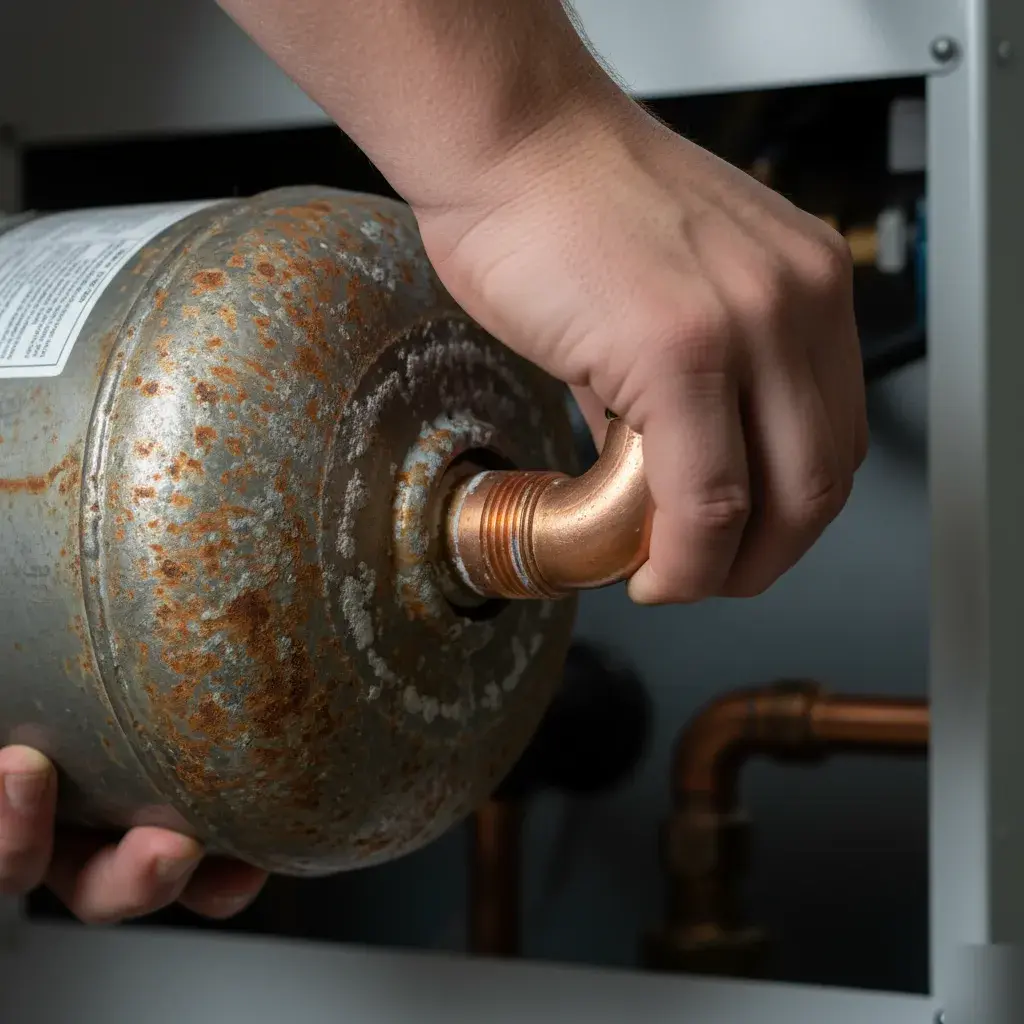
What an Expansion Tank Does
Boiler Expansion Tank Replacement: What the Tank Does and Signs It Failed
This video explains what a boiler expansion tank does and why it matters in a hydronic heating system. As boiler water heats up, it expands, and the expansion tank gives that extra volume somewhere to go so system pressure stays controlled. The video covers signs of a possible tank problem, including pressure relief valve dripping, pressure swings, noisy piping, and inconsistent heating. It also explains common failure modes such as lost air charge, internal bladder failure, or a waterlogged tank. If replacement is needed, the system should be isolated, pressure relieved, the new tank installed and charged correctly, and pressure behavior checked afterward.
Water expands when it heats. In a closed hydronic system, that expanding water needs somewhere to go, or the pressure would climb to unsafe levels every time the boiler fires. The expansion tank provides that space — it is the pressure cushion for the whole system.
Most modern tanks are the bladder or diaphragm type. Inside, a flexible membrane separates the system water from a pocket of pressurized air. As water expands, it pushes against the membrane and compresses the air, absorbing the pressure change. As the system cools and the water contracts, the air pushes back and keeps the pressure stable. Older systems sometimes use plain steel tanks that rely on a trapped air pocket instead of a bladder, and those are more prone to becoming waterlogged over time. Either way, when the air charge is lost or the tank fills with water, it can no longer cushion the system, and the pressure swings begin. For broader context on how hot-water boiler pressure and routine maintenance fit together, Energy.gov furnaces and boilers guidance is a useful non-commercial reference.
Our Boiler Expansion Tank Replacement Process
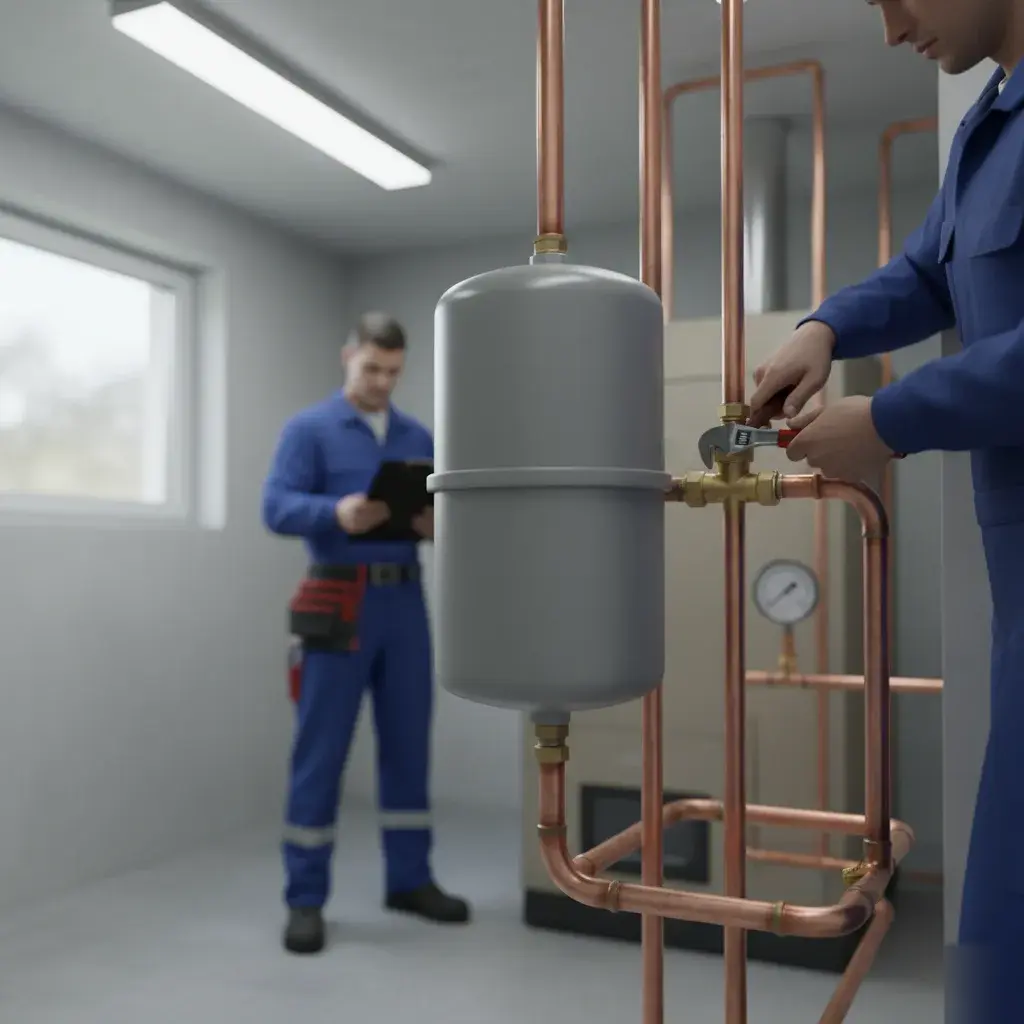
We start by confirming the expansion tank is actually the problem, since pressure issues can have more than one cause. A dripping relief valve, for example, can also come from a failing fill valve or a relief valve that has simply worn out, so we check before we replace.
Once we confirm the tank, we shut down the boiler and relieve the system pressure. We isolate and remove the old tank, then install a new one sized correctly for your system. Sizing matters more than people expect. A tank that is too small cannot absorb the full expansion, and the problem returns even with a brand-new part. We reconnect the tank, refill the system to the correct pressure, set the air charge to match the system, and check for leaks. Then we run the boiler through a heating cycle and watch the pressure gauge to confirm it holds steady. You get a written estimate before we start, and the job usually takes a few hours.
Boiler Expansion Tank Replacement Cost in Deer Park
The cost depends on the size of the tank and how accessible it is in your mechanical room. A straightforward swap on an easily reached tank is on the lower end. A larger tank, or one in a tight or awkward spot, takes more labor to remove and install correctly.
We give you a written estimate before we start, so you know the cost before any work happens. We do not begin work you have not approved. If we open the job and find a related issue — a failing fill valve or a relief valve past its life — we stop and explain it before doing anything beyond what you approved. You decide how to proceed with the full picture in front of you.

Expansion Tank vs Boiler Refill Service
These two get confused because both involve system pressure, but they solve different problems. A boiler refill service brings the system back up to the correct pressure when it has dropped too low — often after a slow leak or after air has gotten into the lines. That is about restoring the right amount of water.
Expansion tank replacement is about managing pressure as the system heats and cools. If your pressure keeps swinging or the relief valve keeps dripping even after a refill, the expansion tank is usually the real problem. Refilling a system with a failed expansion tank only buys a little time before the pressure issues return. We diagnose which one your boiler actually needs rather than guessing, because the wrong fix just means another service call.
Protecting Your Boiler After Tank Replacement
Once the new tank is in and the pressure is set, your boiler should hold a steady reading through its heating cycles. It is worth glancing at the pressure gauge now and then over the first few weeks, especially as the heating season ramps up and the boiler runs more often. A stable gauge is a good sign the replacement did its job.
If you notice the pressure climbing again, the relief valve weeping, or the boiler shutting off on high pressure, call us back. Those signs would point to a related component rather than the new tank itself, and they are worth catching early. For broader boiler issues, our boiler repair and boiler circulator pump replacement services cover the rest of the system. You can see the full range on our Boiler Repair Services hub or our Heating Contractor page.
Related Services
Pressure problems often connect to other boiler work, including boiler refill service and boiler air bleed. When circulation is affected, see boiler circulator pump replacement, for broader boiler issues see boiler repair, and for the full overview visit our Boiler Repair Services hub.
Why Choose Us
Pristine Air Heating and Cooling LLC is insured, and every job comes with a written estimate first. Tank sizing is not a guess on our end — we size it to your system's actual capacity, since the wrong size just brings the pressure problem back. Before we leave, our technicians confirm the pressure holds steady across a full heating cycle, so you are not left wondering whether the fix actually took.
Common Questions
- How do I know if my expansion tank is bad?
- Common signs are pressure that swings too high or too low, a pressure relief valve that drips, or a tank that feels heavy and waterlogged when you tap it. A boiler that shuts off on high pressure can also point to a failed tank. We confirm the diagnosis before recommending replacement.
- Why is my pressure relief valve dripping?
- Often because the expansion tank can no longer absorb the expanding water, so pressure builds until the relief valve opens. The dripping is the valve doing its safety job. Replacing the failed expansion tank usually resolves it, though we also check the valve itself to rule out a separate issue.
- Can a bad expansion tank damage my boiler?
- It puts extra stress on the system by allowing pressure to swing and forcing the relief valve to cycle. Left alone over time, that strain affects the rest of the boiler. Replacing the tank protects the system.
- How long does the replacement take?
- Most expansion tank replacements take a few hours, depending on tank size and accessibility. We refill, set the air charge, and confirm the pressure stays stable before finishing.
- Why does tank size matter?
- A tank that is too small cannot absorb the full expansion of the water, so the pressure problem returns even with a brand-new tank. We size the replacement to your specific system so it actually solves the issue.
- Is this the same as a boiler refill?
- No. A refill restores the correct water pressure when it has dropped too low. Expansion tank replacement manages pressure as the system heats and cools. If pressure keeps swinging after a refill, the expansion tank is usually the real cause.
If your expansion tank has failed, call Pristine Air Heating and Cooling LLC at 631-333-1613. We serve Deer Park, Suffolk County, and Nassau County, with written estimates before any work begins.