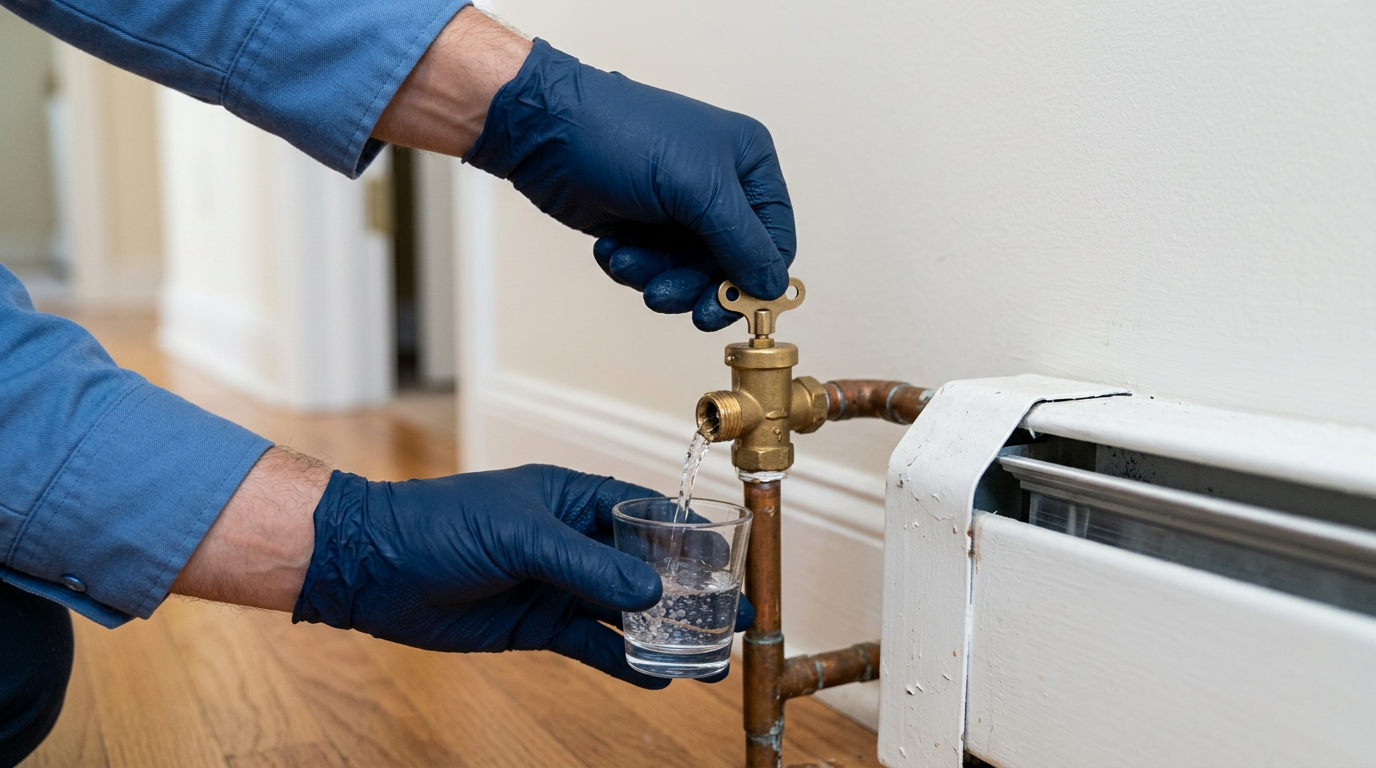
Boiler Air Bleed in Deer Park, NY: Clear Trapped Air and Restore Even Heat
Cold radiators while the boiler runs fine and pressure looks normal? Trapped air is often the reason. We bleed the lines and check why the air got in.
- Insured
- Written estimates before work begins
- Same-day availability when scheduling allows
- Financing options available
- Local reviews
Trapped air in a boiler system can show up as cold radiators, even when the boiler is running fine and the pressure looks normal. The air blocks water flow through parts of the system, so some zones heat and others do not. Pristine Air Heating and Cooling LLC bleeds boiler systems for homes across Deer Park and the surrounding Suffolk and Nassau County towns. We push the air out, restore even heat across every zone, and check for whatever let the air in. Call 631-333-1613 to schedule.
When You Need a Boiler Air Bleed
Air in a hydronic system can be hard to spot at first. The boiler fires, the pressure gauge looks fine, and yet a room or two never warms up. That mismatch is a common sign air is trapped in the lines. It is worth bleeding the system when you notice:
- Cold radiators or baseboard while the boiler is clearly running and hot
- Gurgling or bubbling sounds in the pipes or radiators
- One zone warm, another cold, with no obvious reason
- Radiators that are warm at the bottom but cold at the top — a common trapped-air pattern
- Heat that returned slowly or unevenly after the system was drained, refilled, or worked on
Air gets into a system a few ways: when water is added during a refill, through a small leak that draws air in as pressure cycles, or simply as dissolved air works its way out of the water over time. The fix itself is straightforward — bleeding the trapped air lets the hot water flow again. But here is what matters: if air keeps coming back after a bleed, that can point to a leak or a fill-valve problem, and bleeding alone will not solve it. We check for that while we are there, so you are not bleeding the same radiator every few weeks.
What a Proper Air Bleed Involves
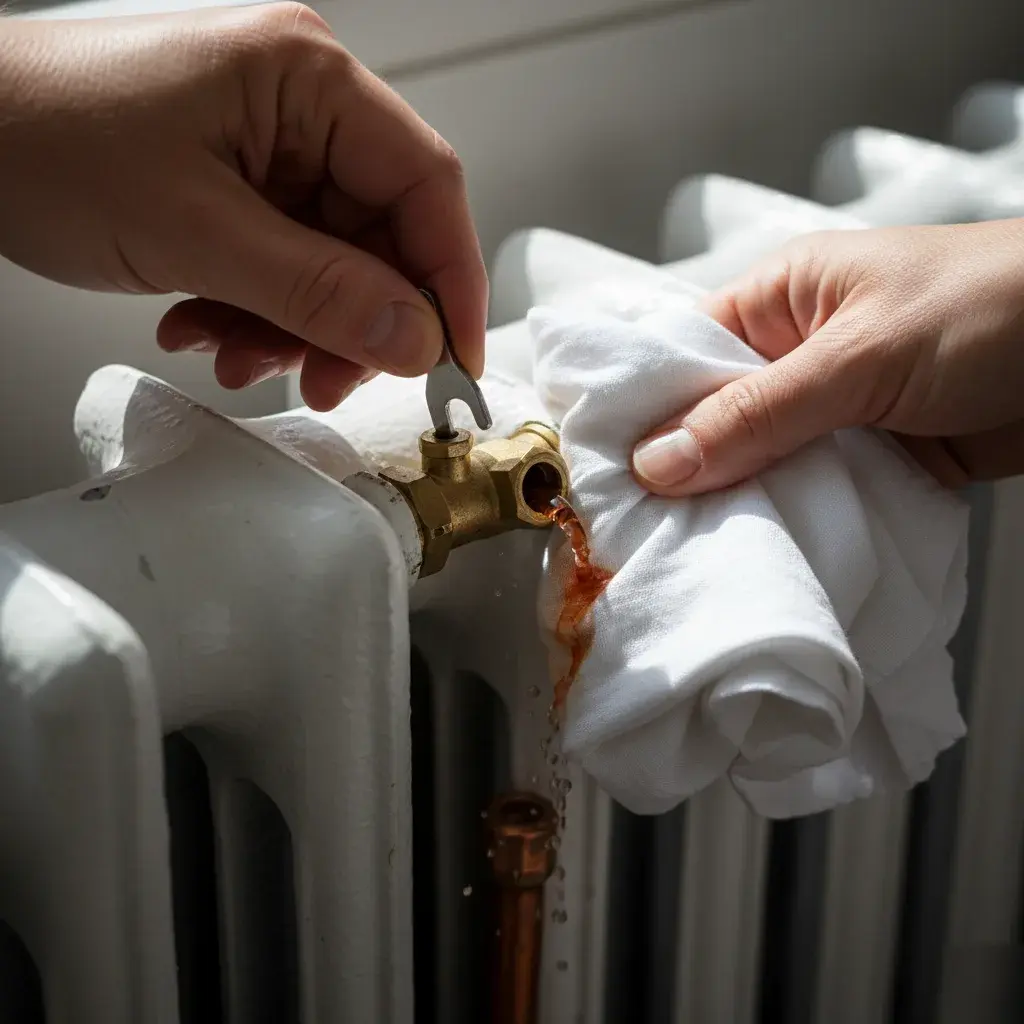
Bleeding a radiator sounds simple, and on its own it can be. But doing it right across a whole system — and confirming the air is actually gone — takes a bit more. Our technicians work through:
- Checking system pressure before we start, so we know what we are working with
- Identifying every bleed point, including high radiators and baseboard loops where air collects
- Opening the bleed valves in the right order, starting from the highest points, until water flows steadily
- Topping off pressure as needed so the system stays at its correct operating level
- Listening and feeling for remaining air pockets after the first pass
- Checking the fill valve and looking for leaks if air keeps returning
- Running the system and confirming heat reaches every zone before we leave
Air rises, which is why the order matters — bleed the wrong points first and you can leave pockets behind. In many older Deer Park homes with long baseboard runs or upstairs radiators, air tends to collect at the far ends and high points, and those are exactly the spots a quick DIY bleed may miss. We do the full system, not one convenient valve.
Our Boiler Air Bleed Process
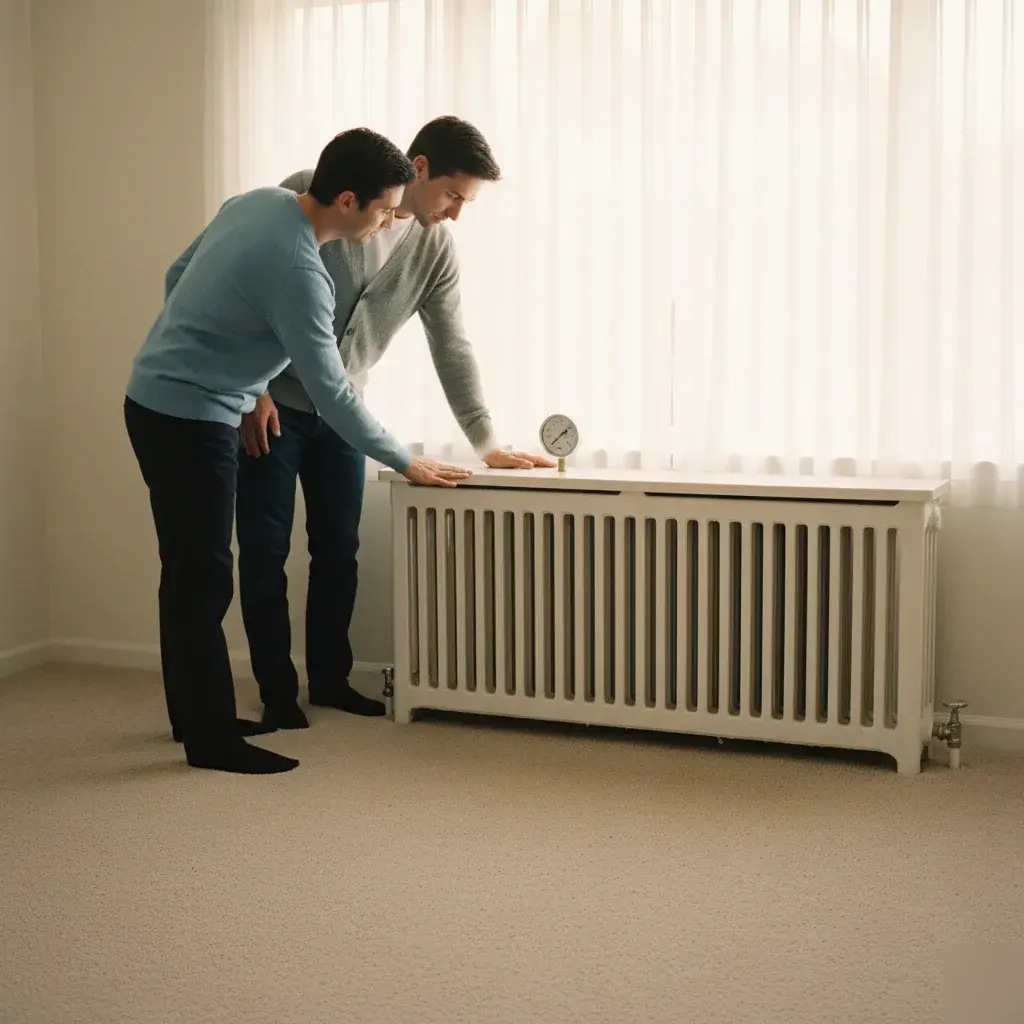
You should see the difference by the time we leave. Here is how the visit goes:
- We check pressure first. Before touching a bleed valve, we confirm the system pressure so we know whether low pressure is part of the problem.
- We map the bleed points. We identify the highest radiators and baseboard loops, since that is where trapped air gathers.
- We bleed in order. Working from the high points down, we open each bleed valve until trapped air clears and water runs steadily.
- We restore pressure. We add water as needed to bring the system back to its correct operating pressure.
- We check why air got in. If it looks like air keeps returning, we inspect the fill valve and look for leaks, and we explain anything we find.
- We test the result. We run the system and confirm heat reaches every zone.
Timing depends on the size of the system and how many bleed points it has. We explain the expected timeline before we begin. If we find a leak or fill-valve problem behind the recurring air, we give you a written estimate before doing anything beyond the bleed.
Boiler Air Bleed Cost in Deer Park
A straightforward air bleed is often a smaller boiler service when no other repair is needed. If we find a leak or a fill-valve issue that is letting air back in, that adds to the scope — and we give you a written estimate for it before we start. You always know what you are spending before we move forward, and we do not perform additional work you have not approved. Financing options are available if the visit uncovers a larger repair.
Why Air Keeps Coming Back in Some Systems
If you are bleeding your radiators every few weeks, the air is a symptom, not the disease. A healthy, sealed hydronic system should not keep taking on air. When it does, there is often a reason worth finding. A small leak somewhere in the loop can draw air in as the system heats and cools, even if the leak is too slow to leave a visible puddle. A waterlogged or failing expansion tank can cause pressure swings that pull air through fittings. An automatic fill valve that is not seating properly can introduce fresh, air-rich water into the system. And on older systems, an air separator or air vent that has stopped doing its job lets dissolved air accumulate instead of venting it off. Many older Deer Park homes still run their original hydronic systems, where decades-old air vents and fittings are common culprits. The bleed restores your heat today; identifying why the air returns is what keeps the cold spots from coming back next month. A well-maintained heating system also runs more efficiently, which the U.S. Department of Energy covers in its guidance on furnaces and boilers.
Related Services
If trapped air turns out to be tied to a pressure or component problem, we handle boiler refill service and boiler expansion tank replacement directly. If a zone stays cold after bleeding, the cause may be a boiler zone valve replacement or boiler circulator pump replacement. To pin down the cause first, start with a heating diagnostic, and for the full overview see our Boiler Repair Services hub.
Why Choose Us
Pristine Air Heating and Cooling LLC is insured, and we give a written estimate whenever a repair is needed. A quick bleed on one radiator is not the same job — we work through every bleed point in the system and check why air got in, not just clear it and move on. Local customers in Deer Park have reviewed our work. We explain what we find in plain language and confirm heat reaches every zone before we leave.
Common Questions
- Why are my radiators cold even though the boiler is running?
- Trapped air is one reason this happens. Air can collect at the high points of the system and block hot water from flowing into those radiators or baseboard loops, so they stay cold while the boiler runs normally and the pressure gauge looks fine. Bleeding the air out lets the water flow again and can restore even heat.
- Can I just bleed the radiators myself?
- Some homeowners do bleed a radiator, but the risk is missing the high points where air collects or leaving pockets behind by bleeding in the wrong order. More importantly, if air keeps coming back, there is an underlying cause — a leak, a fill-valve issue, or a failing air vent — that a bleed alone will not fix. We do the full system and check for that.
- How long does an air bleed take?
- Timing depends on how large the system is and how many bleed points it has. We explain the expected timeline before we begin. If we find a leak or fill-valve problem behind recurring air, that adds to the visit, and we give you a written estimate before proceeding.
- Why does air keep getting back into my boiler system?
- A sealed hydronic system should not keep taking on air. When it does, the possible causes include a slow leak, a waterlogged expansion tank, a fill valve that is not seating properly, or an air vent that has stopped working. We check for these while we bleed so the cold spots do not just come back.
- My radiator is warm at the bottom but cold at the top — is that trapped air?
- It can be. That pattern is a common sign of air trapped at the top of the radiator, where it blocks hot water from filling the upper section. Bleeding that radiator from its valve releases the air and lets it heat fully again. If it returns quickly, we look for why air is accumulating.
- How soon can you come bleed my boiler system?
- We offer same-day availability when scheduling allows. If you have cold radiators in cold weather, call and we will find the earliest time. Many visits can be handled without a second appointment when parts and scheduling allow, and if we uncover a leak or fill-valve issue, we explain the expected timeline for addressing it.
If you have cold spots or noise in your boiler system, call Pristine Air Heating and Cooling at 631-333-1613. We serve Deer Park, Suffolk County, and Nassau County.