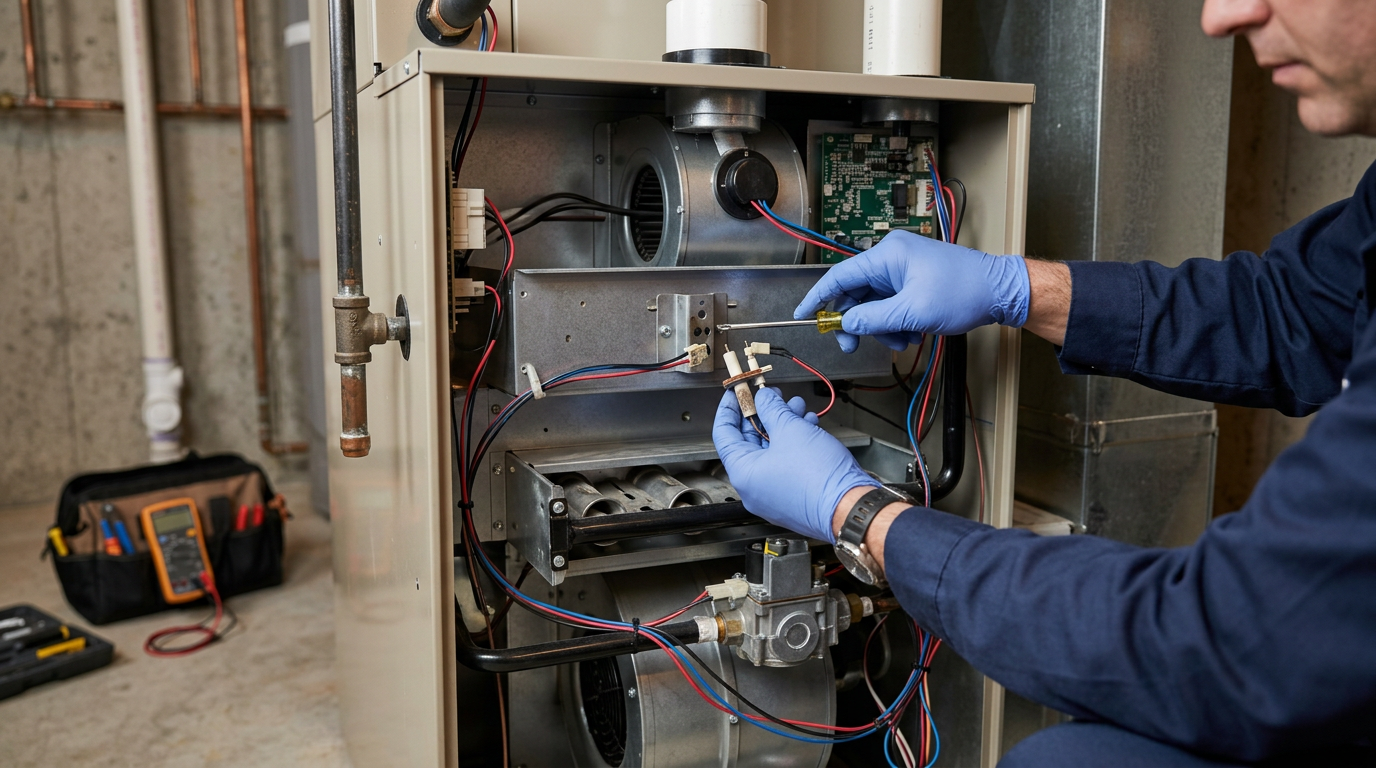
Furnace Igniter Replacement in Deer Park, NY: Get Your Furnace Lighting Again
Furnace clicks on but never fires? A worn or cracked hot-surface igniter is a common cause. We replace it with a matched part and check what made it fail.
- Insured
- Written estimates before work begins
- Same-day availability when scheduling allows
- Financing options available
- Local reviews
A failed igniter is a common reason Deer Park homeowners lose heat mid-winter. The igniter lights the burners in your gas furnace, and when it goes, the system will not produce heat no matter how high you push the thermostat. Most modern furnaces use hot-surface igniters made from silicon carbide or silicon nitride that glow red-hot to fire the gas, and repeated heating and cooling cycles make them brittle over time. Pristine Air Heating and Cooling LLC replaces furnace igniters across Deer Park and the surrounding Suffolk and Nassau County towns. Call 631-333-1613 to schedule.
When You Need Furnace Igniter Replacement
An igniter often fails at a difficult time — the first hard cold snap, when a furnace that sat idle all summer gets pushed hard for the first time. The signs are fairly recognizable once you know them:
- The furnace clicks on but never fires — you hear it try, then nothing
- It short cycles trying to start, attempting ignition a few times before locking out
- The blower runs but the air stays cold, because the burners never lit
- No heat at all, even though the thermostat is calling and the system is powered
- A brief gas smell when it tries to start — if you notice this, shut the furnace down and call right away
Igniters wear out because of what they do: they get blazing hot every time the furnace starts, and that repeated thermal stress makes the ceramic brittle until it cracks. Older furnaces often have igniters that have been in service a long time, and systems that sat idle since spring can be prone to failing the first week they run hard. If your furnace was working and then stopped lighting, the igniter is one of the first things we check — though the symptom can overlap with a dirty flame sensor or other ignition issues, so we confirm the exact cause before replacing anything.
Why the Igniter Fails, and Why It Is Not a DIY Job
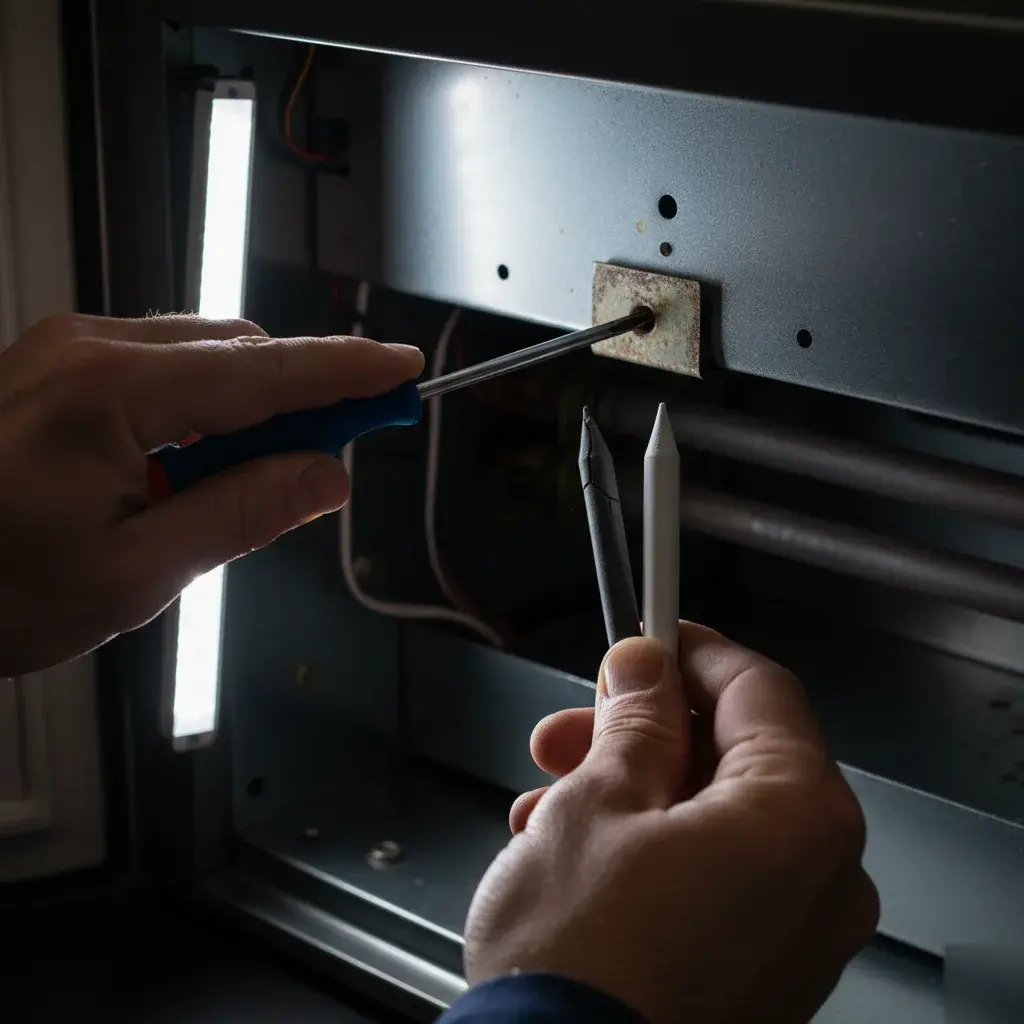
The hot-surface igniter is one of the more fragile parts in your furnace, and understanding that explains both why it fails and why replacing it well matters. The igniter element is thin ceramic that glows red-hot on every ignition cycle. Over many cycles, that heating and cooling makes it brittle, and eventually it cracks — sometimes visibly, sometimes in a hairline you cannot see. A few things can shorten its life: frequent short cycling from another issue, voltage irregularities, and even handling. These igniters are sensitive enough that the oils from a fingerprint on the surface can create a hot spot and cause early burnout, which is one reason this is not a safe DIY swap. Beyond the fragility, there is gas and combustion involved, which raises the stakes on doing it correctly. We do not just swap the part and leave, either — we inspect the flame sensor, gas valve, and control board to check whether something deeper caused the igniter to fail, so you are not back without heat a few weeks later. Combustion safety is exactly why furnace work belongs with a technician; the National Fire Protection Association's home heating safety guidance covers why safe ignition and furnace operation matter.
Our Furnace Igniter Replacement Process
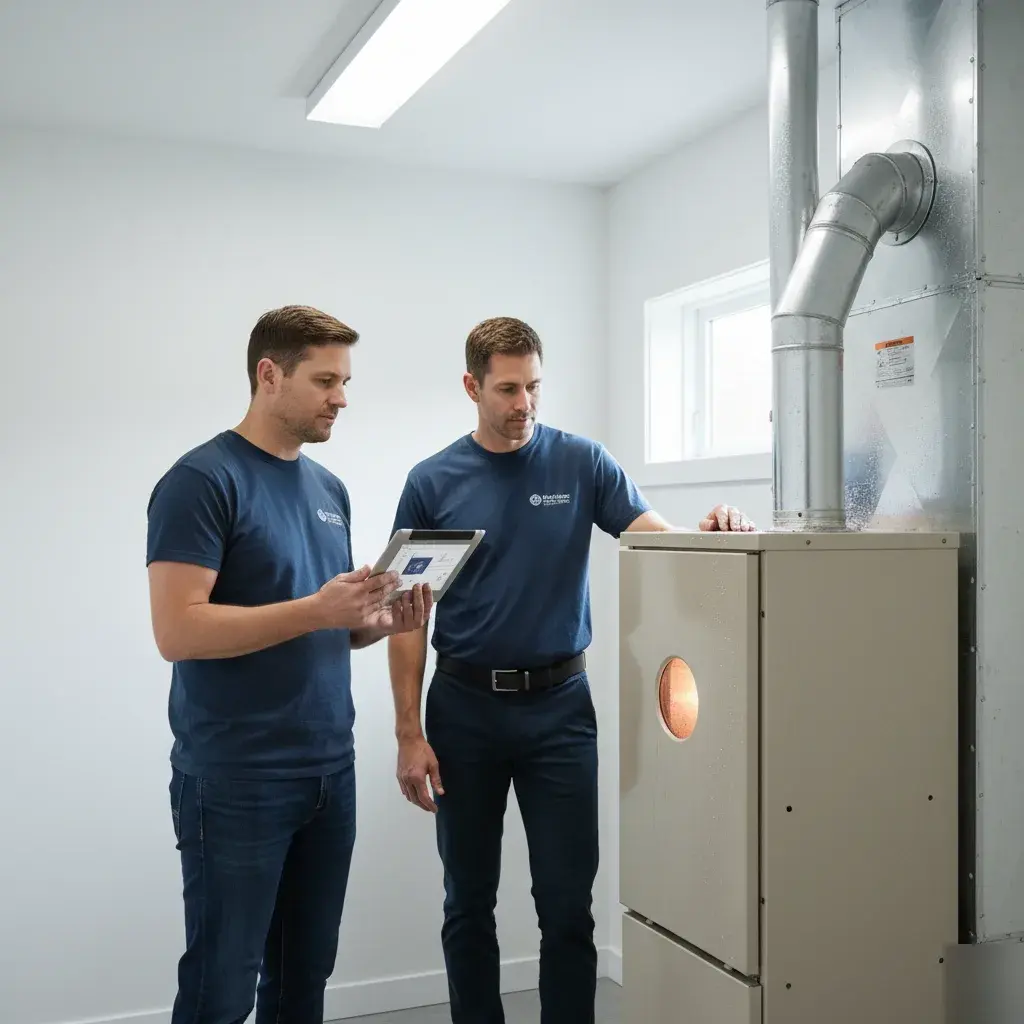
Replacing an igniter is a job we handle regularly through heating season, and we follow the same careful steps each time:
- We confirm the diagnosis. Before replacing anything, we verify the igniter is the failure and not a flame sensor, gas valve, or control-board issue that looks similar.
- We shut down the furnace. We power it down and shut off the gas before removing anything.
- We remove the old igniter. Out comes the failed element, handled carefully so we can inspect it for the cracks or burnout that confirm the cause.
- We install a matched igniter. We fit a new igniter compatible with your furnace, handling it without touching the element surface so the new part is not compromised.
- We check for the root cause. We inspect the flame sensor, gas valve, and control board to confirm nothing deeper drove the failure.
- We test the result. We restore power and gas, start the furnace, and confirm it lights cleanly and runs through a full cycle before we leave.
Timing depends on the diagnosis and what we find during the visit. We explain the expected timeline before we begin, and if we find anything else that needs attention, we tell you before doing any additional work.
Furnace Igniter Replacement Cost in Deer Park
Igniter replacement is often a smaller furnace repair, though the cost depends on the igniter type and your furnace model. We give you a written estimate before we start, and you approve the work before we begin. You know the cost before any work happens. Financing options are available if the visit uncovers a larger repair behind the failure.
Why Igniters Tend to Fail First in Older Deer Park Furnaces
If your furnace is on the older side, the igniter is one of the parts more likely to show wear first, and the reasons are worth understanding. The hot-surface igniter is a wear part by design — it is meant to be replaced periodically, not to last the life of the furnace. Every ignition cycle stresses it, so a furnace that has run many winters has an igniter that has cycled tens of thousands of times. Systems that sit idle through spring and summer get a hard restart the first cold week, and that is when brittle, end-of-life igniters can crack. Older furnaces can also run a little rough — slightly off gas pressure, a marginal flame sensor, or a control board that is not as crisp as it once was — and any of those can make the igniter work harder, accelerating wear. Many older Deer Park homes have furnaces with long-serving components, so an igniter replacement can be the first of a few small parts reaching the end of their life at similar times. That is exactly why we check the surrounding components when we replace one: catching a marginal flame sensor or a developing issue at the same visit may save you a second no-heat call later in the season. Keeping up with filter changes and seasonal maintenance also tends to reduce short cycling and the extra igniter stress that comes with it.
Related Services
If the trouble turns out to be ignition-related but not the igniter, we also handle flame sensor service and furnace limit switch service. To pin down the exact cause first, start with a heating diagnostic. For broader furnace problems see furnace repair, to stay ahead of failures see heating seasonal maintenance, and for the full overview visit our Furnace Repair Service hub.
Why Choose Us
Pristine Air Heating and Cooling LLC is insured, and we give a written estimate on every job. We confirm the diagnosis before replacing anything, use igniters matched to your furnace, handle them correctly so the new part is not compromised, and check the related components so the failure does not repeat. Local customers in Deer Park have reviewed our work. We test the furnace through a full cycle before we leave.
Common Questions
- My furnace clicks but never lights — is it the igniter?
- That pattern can be a sign of a failed hot-surface igniter. That said, a dirty flame sensor or a gas-valve issue can look similar, so we confirm the exact cause before replacing the part. That way you are not paying for something you did not need.
- Can I replace the igniter myself?
- We do not recommend it. Hot-surface igniters are fragile ceramic, and the oils from a fingerprint on the element can cause a hot spot and early burnout. There is also gas and combustion involved, which raises the safety stakes. A technician handles the part correctly and checks why it failed in the first place.
- How long does an igniter replacement take?
- Timing depends on the diagnosis and what we find during the visit. Confirming the cause and inspecting the flame sensor, gas valve, and control board is part of the job, since those checks help make sure the new igniter is not about to fail for the same reason. We explain the expected timeline before we begin.
- Why did my igniter fail in the first place?
- Hot-surface igniters are wear parts. They glow red-hot on every ignition cycle, and that repeated thermal stress makes the ceramic brittle until it cracks. Frequent short cycling, voltage irregularities, or simply age can speed it up. Older furnaces and systems that sat idle all summer can be prone to igniter failure the first hard cold week.
- I smelled gas when my furnace tried to start — what should I do?
- Shut the furnace down and call right away. A brief gas smell when the furnace fails to light means gas is being released without igniting, and that is not something to keep trying. Do not keep cycling the furnace. We check the igniter, gas valve, and related components to confirm it lights safely.
- How soon can you come out?
- We offer same-day availability when scheduling allows. We carry commonly used igniters when available, so many visits can be handled without a second appointment when parts and scheduling allow. If you have no heat in cold weather, call right away and we will find the earliest time.
If your furnace will not light, call Pristine Air Heating and Cooling at 631-333-1613. We serve Deer Park, Suffolk County, and Nassau County.